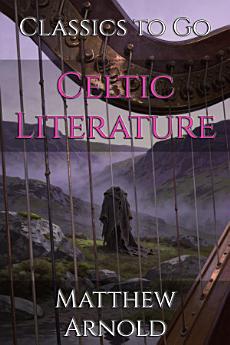
Celtic Literature: Restored Classics to Go Edition

· Otbebookpublishing
Ebook
165
Pages
Eligible

About this ebook

Matthew Arnold's The Study of Celtic Literature opens as a searching meditation on Celtic identity, literary history, and the fading power of a people remembered through loss as much as achievement. From the haunting echo of Ossian, the book moves into close cultural observation, using Wales, Llandudno, and the Eisteddfod to show a living tradition struggling for recognition under English dominance. Arnold argues that Welsh, however cherished, cannot serve modern public life or serious literature in the same way English can, and that attempts at revival may become impractical or artificial. From there, he turns to the Celtic temperament itself: not timid, but deeply sentimental, emotionally vivid, sociable, and impulsive, capable of brilliance and charm yet often lacking the patience and balance needed for fully realized art. He finds its strongest expression in "natural magic" — that enchanted treatment of nature seen in Shakespeare, Keats, and other poets. The book broadens into a comparative literary study, contrasting Greek clarity, German seriousness, and the spiritual tasks of Dante, Shakespeare, and Goethe, while questioning English taste's mixed and unstable character. Throughout, Arnold defends the enduring force of Celtic influence in English poetry. This edition has been fully restored with modern typesetting, custom cover design.
Matthew Arnold's The Study of Celtic Literature opens as a searching meditation on Celtic identity, literary history, and the fading power of a people remembered through loss as much as achievement. From the haunting echo of Ossian, the book moves into close cultural observation, using Wales, Lla...

About the author

Matthew Arnold (1822–1888) was an English poet, critic, and educator whose life bridged the worlds of Victorian literature, public service, and cultural debate. Born into an intellectually distinguished family and educated at Rugby and Oxford, he went on to work as a school inspector while building a reputation as one of the most thoughtful voices of his age. He first gained fame as a poet of reflective clarity and moral seriousness, but his lasting influence came through his criticism, where he argued for high standards in literature, the value of culture, and the need for intellectual honesty in a rapidly changing society. His writing often explores the tension between faith and doubt, action and reflection, and the search for meaning in modern life. In works such as his study of Celtic literature, he showed a deep interest in national identity, literary tradition, and the power of imagination to shape a people's spirit. Arnold remains relevant today because he asks questions that still matter: how do we preserve culture without becoming rigid, and how do we find balance amid social and spiritual uncertainty? His legacy endures in literary criticism, cultural commentary, and the idea that serious reading can help us live more thoughtfully. Readers who enjoy elegant prose, big ideas, and conversations about literature's role in society will find him especially rewarding.
Matthew Arnold (1822–1888) was an English poet, critic, and educator whose life bridged the worlds of Victorian literature, public service, and cultural debate. Born into an intellectually distinguished family and educated at Rugby and Oxford, he went on to work as a school inspector while buildi...

Rate this ebook

Tell us what you think.

Reading information

Smartphones and tablets
Install the Google Play Books app for Android and iPad/iPhone. It syncs automatically with your account and allows you to read online or offline wherever you are.
Laptops and computers
You can listen to audiobooks purchased on Google Play using your computer's web browser.
eReaders and other devices
To read on e-ink devices like Kobo eReaders, you'll need to download a file and transfer it to your device. Follow the detailed Help Center instructions to transfer the files to supported eReaders.