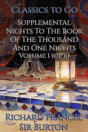
Supplemental Nights To The Book Of The Thousand And One Nights: Restored Classics to Go Edition
About this ebook
Discover more
About the author
Sir Richard Francis Burton (1821–1890) was a remarkable Victorian explorer, soldier, scholar, translator, and linguist whose life seemed to unfold at the far edge of the map and the far edge of conventional society. Born in Torquay and educated in England, he served in the East India Company, traveled widely across Africa, the Middle East, and Asia, and gained a reputation for extraordinary courage, restless curiosity, and an almost unmatched command of languages and cultures. His literary legacy rests not only on his vivid travel writing and ethnographic observations, but also on his daring translations and adaptations of classical and Eastern texts, which opened English readers to worlds of story, poetry, and custom they might otherwise never have encountered. Burton was fascinated by desire, religion, ritual, secrecy, and the tensions between public morality and private experience, and these concerns run through his work with a candor that still feels modern. He remains significant today because he challenged Victorian limits of taste and knowledge, insisting that cultures should be encountered in their complexity rather than flattened into stereotype. Readers now value him both as a brilliant stylist and as a controversial figure whose life embodies the possibilities and blind spots of imperial-era scholarship. Those who enjoy adventurous travel writing, bold translation, and richly textured encounters with global literature will find him especially rewarding.