About this ebook
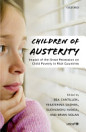
This book examines the link between poverty on the one hand and labour market participation and the distributive capacity of welfare states on the other hand. It focuses on the working-age population and the evolutions in Europe during the 'good economic years' before the financial crisis. The book provides social research in an accessible way. It introduces the reader into the various concepts of measuring poverty and exclusion and discusses data limitations. Obviously, we are not the first to observe worrying trends in poverty or inequality. The specific approach in this book may be summarized as follows. First, to gain a better understanding of the nexus of labour market participation, social redistribution and poverty, we focus on the distinction between work-poor and work-rich households. Second, we augment a traditional 'pre-post approach' of the impact of social transfers with regression analysis and policy indicators. Third, we refine the common method of measuring the redistributive effect of social expenditure, particularly for in-kind benefits . Fourth, we give due consideration to concepts and data. Most of the analyses are based on the European Statistics on Income and Living Conditions (SILC), but when relevant and feasible, we include alternative surveys (in the case of Germany, SILC and SOEP data) and additional data, i.e. administrative expenditure data and indicators that inform directly on policy. Finally, we discuss our observations with reference to the employment-centred welfare reforms that were prominent in European countries since the mid-1990s, and link the analysis with a broader perspective on the socio-economic, demographic and paradigmatic evolutions in contemporary welfare states.
This book examines the link between poverty on the one hand and labour market participation and the distributive capacity of welfare states on the other hand. It focuses on the working-age population and the evolutions in Europe during the 'good economic years' before the financial crisis. The bo...
About the author
Bea Cantillon is Professor of Social Policy at the Herman Deleeck Centre for Social Policy, University of Antwerp.Frank Vandenbroucke, PhD, is a professor at the KULeuven and the University of Antwerp, Herman Deleeck Centre for Social Policy.
Bea Cantillon is Professor of Social Policy at the Herman Deleeck Centre for Social Policy, University of Antwerp.Frank Vandenbroucke, PhD, is a professor at the KULeuven and the University of Antwerp, Herman Deleeck Centre for Social Policy.
Rate this ebook
Tell us what you think.
Reading information
Smartphones and tablets
Install the Google Play Books app for Android and iPad/iPhone. It syncs automatically with your account and allows you to read online or offline wherever you are.
Laptops and computers
You can listen to audiobooks purchased on Google Play using your computer's web browser.
eReaders and other devices
To read on e-ink devices like Kobo eReaders, you'll need to download a file and transfer it to your device. Follow the detailed Help Center instructions to transfer the files to supported eReaders.