The Impending World Government: Is It Just a Conspiracy Theory?
About this ebook
This work does not make conclusive claims about a project of global authority, nor does it offer absolute truths.
Its objective is to analyze documented facts, public statements by international organizations, geopolitical transformations, and verifiable historical processes in order to assess whether the concept of world government is speculative fantasy or a predictable political evolution.
The reader is invited to contrast sources, examine data, and form their own judgment.
After the Second World War, nation-states began to cede sovereignty to supranational structures:
• 🏛 European Union
• 🌍 United Nations
• 💵 IMF and World Bank
• 🛡 NATO
• 🧬 WHO and multilateral health bodies
What began as economic cooperation gradually became a transfer of political, regulatory, and cultural capacities. The question many avoid is simple:
Will this process end, or does it continue toward a centralized world government?
CONTENT ANALYZED IN DEPTH
• The historical shift from national sovereignty → international administration
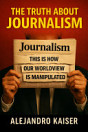
• The media consolidation of Reuters–AFP–AP and the decline of independent journalism
• Treaties, pacts, and global agendas that reduce the legislative capacity of states
• Public documents that openly speak of global governance
• Why is criticizing these processes considered taboo?
• Does the internet democratize information, or is it the new medium of control?
For decades, the press was the barrier between power and the people.
Today, informational uniformity, censorship under the banner of disinformation, and editorial homogenization have eroded that counterweight. It is increasingly common for citizens to accept supranational policies without understanding their origin or scope.
The internet shattered the exclusivity of knowledge.
What once only a minority with privileged access could study can now be investigated by anyone—provided they dare to look beyond the headlines.
This book brings together official speeches, verifiable quotes, real policies already implemented, and historical processes that point in a structural direction:
integration, standardization, centralization of power.
If world government is impossible,
why does everything move in the opposite direction?
If it is inevitable,
do we want to reach it without debating it?
This is not a book for believers nor for automatic deniers.
It is a book for readers who think, who do not accept prefabricated answers, and who understand that asking questions is not dangerous:
🔹 What is dangerous is stopping asking them.
Discover more
Ratings and reviews
About the author
Alejandro Kaiser
Author and editor specializing in history, contemporary politics, and cultural criticism.
His work examines events, discourses, and processes that have shaped the modern world, drawing on primary documents, historical archives, and comparative sources. With a direct and uncompromising style, Kaiser tackles controversial topics—from geopolitical conflicts and media propaganda to energy, ideologies, and historical memory—with a clear purpose: to scrutinize what is often oversimplified, censored, or presented unilaterally.
His books do not seek ideological allegiance but critical reflection. They invite readers to: ✔ Challenge official narratives.
✔ Question established certainties.
✔ Form their own opinions based on evidence, context, and critical thinking.
📚 Interested in works that illuminate history’s uncomfortable truths? Here, you’ll find rigorous research + a bold, unflinching voice to look beyond the surface.
📫 Contact: alejandrokaiser@proton.me
🌍 Social Media:
• Facebook: Follow me for updates, debates, and new material: facebook.com/AKaiserAutor
• Instagram: Visual content, reflections, and more: @alejandro_kaiser_escritor
Read freely. Think without permission.