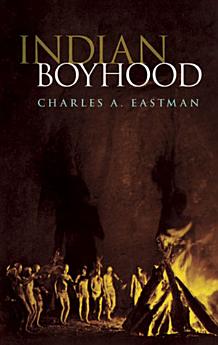
Indian Boyhood
Jun 2012 · Courier Corporation
Ebook
272
Pages
Tools
info
About this ebook
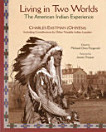
Charles Eastman, or Hakadah, as his Sioux relatives and fellow tribesmen knew him, as a full-blooded Indian boy learned the reticent manners and stoical ways of patience and bravery expected of every young warrior in the 1870's and 1880's. The hunts, games, and ceremonies of his native tribe were all he knew of life until his father, who had spent time with the white man, came to find him.
Indian Boyhood is Eastman's first-hand reminiscence of the life he led until he was fifteen with the nomadic Sioux. Left motherless at birth, he tells how his grandmother saved him from relatives who offered to care for him "until he died." It was that grandmother who sang him the traditional Indian lullabies which are meant to cultivate bravery in all male babies, who taught him not to cry at night (for fear of revealing the whereabouts of the Sioux camp to hostile tribes), and who first explained to him some of the skills he would need to survive as an adult in the wilds. Eastman remembers the uncle who taught him the skills of the hunt and the war-path, and how his day began at first light, when his uncle would startle him from sleep with a terrifying whoop, in response to which the young boy was expected to jump fully alert to his feet, and rush outside, bow in hand, returning the yell that had just awakened him. Yet all Indian life did not consist in training and discipline. In time of abundance and even in famine, Indian children had much time for sport and games of combat — races, lacrosse, and wrestling were all familiar to Eastman and his childhood friends.
Here too are observations about Indian character, social custom, and morality. Eastman describes the traditional arrangements by which the tribe governed itself — its appointed police force, hunting and warrior scouts, and its tribal council, and how the tribe supported these officers with a kind of taxation. Eastman also includes family and tribal legends of adventure, bravery, and nature that he heard in the lodge of Smoky Day, the tribe historian. But Eastman's own memories of attacks by hostile tribes, flights from the white man's armies, and the dangers of the hunt rival the old legends in capturing a vision of life now long lost.
Charles Eastman, or Hakadah, as his Sioux relatives and fellow tribesmen knew him, as a full-blooded Indian boy learned the reticent manners and stoical ways of patience and bravery expected of every young warrior in the 1870's and 1880's. The hunts, games, and ceremonies of his native tribe were...
About the author
A Santee Sioux, born in Red Falls, Minnesota, Charles Eastman was raised by his grandmother and uncle in Manitoba, Canada, where he learned Native American traditions and lore. As a teenager he returned to his father's family and attended mission schools and Beloit College. He graduated from Dartmouth College in 1887 and from Boston University School of Medicine in 1890. Although his background made him unwelcome in some parts of white society and his education made him uneasy in Native American cultures, he worked for his people throughout his life as a doctor, as a representative in Washington, D.C., and as a founder of the Society of American Indians. His first published book, Indian Boyhood (1902), written for children, tells the stories and traditions of the Sioux nation. Red Hunters and the Animal People (1904), Old Indian Days (1907), and Wigwam Evenings (1909), written with the help of his wife, Elaine Goodale Eastman, continue in this vein, but his later work, including The Soul of the Indian (1911), The Indian Today (1915), and his autobiography, From the Deep Woods to Civilization (1916), attempts to interpret Native American culture for white society, describing the problems of assimilation.
A Santee Sioux, born in Red Falls, Minnesota, Charles Eastman was raised by his grandmother and uncle in Manitoba, Canada, where he learned Native American traditions and lore. As a teenager he returned to his father's family and attended mission schools and Beloit College. He graduated from Dart...
Rate this ebook
Tell us what you think.
Reading information
Smartphones and tablets
Install the Google Play Books app for Android and iPad/iPhone. It syncs automatically with your account and allows you to read online or offline wherever you are.
Laptops and computers
You can listen to audiobooks purchased on Google Play using your computer's web browser.
eReaders and other devices
To read on e-ink devices like Kobo eReaders, you'll need to download a file and transfer it to your device. Follow the detailed Help Center instructions to transfer the files to supported eReaders.