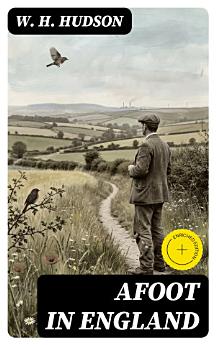
Afoot in England: Enriched edition. A Lyrical Naturalist's Walk Through the English Countryside, Rural Life, and Early Conservation Reflections
W. H. Hudson
May 2022 · DigiCat
Ebook
262
Pages
family_home
Eligible
info
About this ebook
In "Afoot in England," W. H. Hudson embarks on a lyrical and contemplative exploration of the English landscape through the eyes of a passionate naturalist and keen observer. Richly descriptive prose invites readers into the green tapestry of the English countryside, where Hudson's reflections on nature merge with philosophical musings. This work is not merely a travelogue; it promotes a profound sense of reverence for the natural world and critiques the encroachment of modernity. Positioned within the literary context of the late 19th century, Hudson's narrative resonates with the Romantic tradition while also foreshadowing the burgeoning conservation movement. W. H. Hudson, an Argentine-born writer educated in England, possessed an innate curiosity about botany and ornithology that infuses his narrative. His experiences growing up amidst the flora and fauna of the Pampas eventually led him to England, where he found inspiration in the rural landscapes and wildlife. Hudson's diverse background and education illuminated his observations, intertwining personal significance with broader ecological concerns, making his writings both reflective and socially aware. This book is a must-read for anyone who appreciates the intersections of travel, nature, and literary beauty. Hudson's evocative prose will resonate with readers seeking an immersive experience in the English countryside, offering not only a journey through picturesque settings but also an invitation to reflect on humanity's relationship with nature. In this enriched edition, we have carefully created added value for your reading experience: - A succinct Introduction situates the work's timeless appeal and themes. - The Synopsis outlines the central plot, highlighting key developments without spoiling critical twists. - A detailed Historical Context immerses you in the era's events and influences that shaped the writing. - A thorough Analysis dissects symbols, motifs, and character arcs to unearth underlying meanings. - Reflection questions prompt you to engage personally with the work's messages, connecting them to modern life. - Hand‐picked Memorable Quotes shine a spotlight on moments of literary brilliance. - Interactive footnotes clarify unusual references, historical allusions, and archaic phrases for an effortless, more informed read.
In "Afoot in England," W. H. Hudson embarks on a lyrical and contemplative exploration of the English landscape through the eyes of a passionate naturalist and keen observer. Richly descriptive prose invites readers into the green tapestry of the English countryside, where Hudson's reflections on...
About the author
William Henry Hudson, born on August 4, 1841, in Quilmes, near Buenos Aires, Argentina, was an author, naturalist, and ornithologist of British parentage. Spending his early life in Argentina, his experiences with nature there formed the foundation of his later work and interests (Bainbridge, 1986). In 1874, Hudson settled in England, where he became known for his writing on natural history and rural subjects, as well as his distinctive literary style that blended Romanticism with vivid realism. 'Afoot in England' (1909), showcases Hudson's passion for the English countryside, weaving anecdotal accounts with social commentary, reflecting his wandering spirit and keen observation skills. 'Green Mansions: A Romance of the Tropical Forest' (1904) is another of Hudson's notable works, revealing his literary range with its romantic adventure narrative set in the South American wilderness. Hudson's influence as a writer was recognized in his later years, though it was not until after his death in 1922 that his work received widespread attention. Today, W. H. Hudson is celebrated for both his contributions to English literature and his pioneering attitudes towards nature conservation. Scholars have often noted Hudson's lyrical prose style and his deep affinity for the natural world (Tomalin, 1982). Hudson was a founding member of the Royal Society for the Protection of Birds, and his legacy continues to inspire environmentalists and writers alike.
William Henry Hudson, born on August 4, 1841, in Quilmes, near Buenos Aires, Argentina, was an author, naturalist, and ornithologist of British parentage. Spending his early life in Argentina, his experiences with nature there formed the foundation of his later work and interests (Bainbridge, 198...
Rate this ebook
Tell us what you think.
Reading information
Smartphones and tablets
Install the Google Play Books app for Android and iPad/iPhone. It syncs automatically with your account and allows you to read online or offline wherever you are.
Laptops and computers
You can listen to audiobooks purchased on Google Play using your computer's web browser.
eReaders and other devices
To read on e-ink devices like Kobo eReaders, you'll need to download a file and transfer it to your device. Follow the detailed Help Center instructions to transfer the files to supported eReaders.