About this ebook
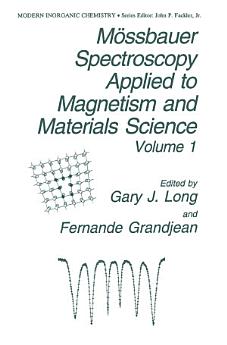
During the past 30 years materials science has developed into a full-fledged field for basic and applied scientific enquiry. Indeed, materials scientists have devoted their efforts to creating new materials with improved electronic, magnetic, thermal, mechanical, and optical properties. Often unnoticed, these new materials are rapidly invading our homes and automobiles, and may be found in our utensils, electronic equipment, textiles, home appliances, and electric motors. Even though they may go unnoticed, these new materials have either improved the efficiency and lifetime of these items or have reduced their weight or cost. In particular, magnetically ordered materials are useful in various applications, such as motors, magnetic imaging, magnetic recording, and magnetic levitation. Hence, much effort has been devoted to the development of better hard magnetic materials, magnetic thin films, and molecular magnets. During the same period of time, Mossbauer-effect spectroscopy has grown from a laboratory curiosity to a mature spectroscopic technique, a technique that probes solid-state materials at specific atomic sites and yields microscopic information on the magnetic and electronic properties of these materials. Iron-57 is the most commonly and easily used Mossbauer-effect isotope and, of course, is particularly relevant for the study of magnetic materials. Various applications of Mossbauer spectroscopy to magnetic materials are discussed in the first six chapters of this volume. Other isotopes such as zinc-67 and gadolinium-ISS have recently been used to study the electronic properties of zinc compounds and the electronic and magnetic properties of rare-earth transition metal compounds.
During the past 30 years materials science has developed into a full-fledged field for basic and applied scientific enquiry. Indeed, materials scientists have devoted their efforts to creating new materials with improved electronic, magnetic, thermal, mechanical, and optical properties. Often unn...
Discover more
Rate this ebook
Tell us what you think.
Reading information
Smartphones and tablets
Install the Google Play Books app for Android and iPad/iPhone. It syncs automatically with your account and allows you to read online or offline wherever you are.
Laptops and computers
You can listen to audiobooks purchased on Google Play using your computer's web browser.
eReaders and other devices
To read on e-ink devices like Kobo eReaders, you'll need to download a file and transfer it to your device. Follow the detailed Help Center instructions to transfer the files to supported eReaders.