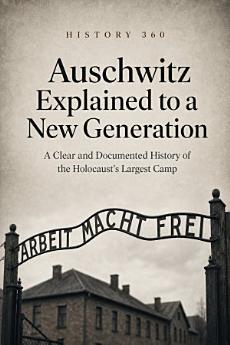
Auschwitz Explained to a New Generation: A Clear and Documented History of the Holocaust's Largest Camp
About this ebook
There is a place in southern Poland where about one and a half million human beings were murdered in fewer than five years, most of them Jews, most of them in gas chambers built for the purpose. This book is about that place — how it came to exist, the people who died there, and the few who survived — and it is written above all for those who did not live through that century and may imagine it has nothing to do with them. It does. Walking the careful line between looking away and looking too greedily, it neither flinches from the truth nor sensationalizes it: the horror of Auschwitz, stated plainly in documented facts, needs no exaggeration. Built entirely on the overwhelming historical record — the Germans’ own meticulous files, the perpetrators’ confessions, thousands of survivor testimonies, the escapees’ reports, and the site that still stands — it traces the whole descent: the long road of European antisemitism, the Nazi rise, the ghettos, the decision for genocide at Wannsee, the machinery of Birkenau, the victims and who they were, daily life and death in the camp, the perpetrators (ordinary people who made choices), the Sonderkommando and the limits of resistance, the world that knew, liberation, the survivors’ testimony, the trials from Nuremberg to Frankfurt, and the fight against denial. Following the rule of the HISTORY 360 collection, it states the documented facts plainly and flags the killers’ euphemisms — and the deniers’ lies — for exactly what they were. A sober, dignified, and essential book about why the memory must be carried forward, because “never again” is not a fact but a task.