Engendering Development: Capitalism and Inequality in the Global Economy
About this ebook
The textbook draws on feminist and critical development scholarship to provide insightful ways of understanding and critiquing capitalist economic trajectories by focusing on the way development is enacted and protested by men and women. It incorporates analyses of the lived experiences in the global north and south in place-specific ways. Taking a broad perspective on development, Engendering Development draws on textured case studies from the authors’ research and the work of geographers and feminist scholars. The cases demonstrate how gendered, raced and classed subjects have been enrolled in global capitalism, and how individuals and communities resist, embrace and rework development efforts. This textbook starts from an understanding of development as global capitalism that perpetuates and benefits from gendered, raced and classed hierarchies.
The book will prove to be useful to advanced undergraduate and graduate students enrolled in courses on development through its critical approach to development conveyed with straightforward arguments, detailed case studies, accessible writing and a problem-solving approach based on lived experiences.
About the author
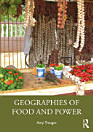
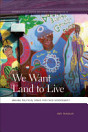
Amy Trauger is an Associate Professor in the Department of Geography at the University of Georgia, USA. She has published more than 20 journal articles on gender, labor and sustainability in agriculture, organic food supply chains and food sovereignty. She is the author of We Want Land to Live! Making Political Space for Life. She edited Food Sovereignty in International Context, published by Earthscan/Routledge, and is a co-editor of Making Policy for Food Sovereignty: Social Movements, Markets and the State with Priscilla Claeys and Annette Desmarais, also published by Earthscan/Routledge.
Jennifer L. Fluri is an Associate Professor in the Department of Geography at the University of Colorado-Boulder. She has over 20 publications in peer-reviewed academic journals. Internationally, her research focuses on gender, geopolitics and international development in Afghanistan. In Colorado, she co-directs the Boulder Affordable Housing Research Initiative, a collaborative and service-based research project (Colorado.edu/BAHRI). She has co-authored two books, Carpetbaggers of Kabul and other American-Afghan Entanglements with Rachel Lehr, and Feminist Spaces: Gender and Geography in a Global Context with Ann Oberhauser, Risa Whiston and Sharlene Mollett. She is the co-editor, with Katharyne Mitchell and Reece Jones, of the Handbook on Critical Geographies of Migration.