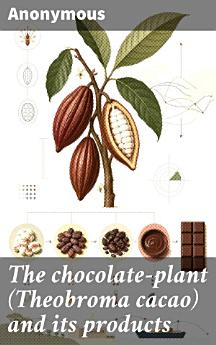
The chocolate-plant (Theobroma cacao) and its products
Anonymous
Jun 2026 · Good Press
Ebook
28
Pages
family_home
Eligible
info
About this ebook
This anonymous study, The chocolate-plant (Theobroma cacao) and its products, is a compact yet illuminating account of cacao as botanical specimen, commercial commodity, and cultural substance. Written in the informative prose characteristic of nineteenth- and early twentieth-century scientific popularization, it likely combines taxonomy, cultivation, processing, and manufacture into a single narrative of transformation from tropical plant to finished chocolate. Its style is descriptive and didactic, situated within a broader literature of economic botany and imperial trade that sought to render distant natural resources legible to industrial and educated readers alike. Though the author remains unidentified, the book clearly reflects the perspective of a writer shaped by the era's expanding interest in agricultural science, global commerce, and food manufacture. The anonymity is itself suggestive: such works were often produced by specialists, editors, or institutional compilers whose authority lay less in personal fame than in technical command. The text's attention to cacao's properties and products implies familiarity with both scientific classification and the commercial networks that made chocolate a modern staple. This volume will especially reward readers interested in food history, colonial trade, botanical literature, and the prehistory of modern consumer culture. It is recommended as both a documentary artifact and an engaging introduction to how cacao was once understood, valued, and explained.
This anonymous study, The chocolate-plant (Theobroma cacao) and its products, is a compact yet illuminating account of cacao as botanical specimen, commercial commodity, and cultural substance. Written in the informative prose characteristic of nineteenth- and early twentieth-century scientific p...
Rate this ebook
Tell us what you think.
Reading information
Smartphones and tablets
Install the Google Play Books app for Android and iPad/iPhone. It syncs automatically with your account and allows you to read online or offline wherever you are.
Laptops and computers
You can listen to audiobooks purchased on Google Play using your computer's web browser.
eReaders and other devices
To read on e-ink devices like Kobo eReaders, you'll need to download a file and transfer it to your device. Follow the detailed Help Center instructions to transfer the files to supported eReaders.