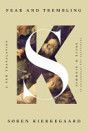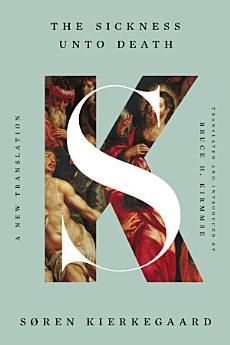
The Sickness Unto Death: A New Translation
Feb 2023 · Liveright Publishing
Ebook
224
Pages
About this ebook
The first new translation of Kierkegaard’s masterwork in a generation brings to life this impassioned investigation of the self. The “greatest psychologist of the spirit since St. Augustine” (Gregory R. Beabout), Søren Kierkegaard is renowned for such richly imagined philosophical works as Fear and Trembling and The Concept of Anxiety. Yet only The Sickness unto Death condenses his most essential ideas—on aesthetics, ethics, and religion—into a single volume.
First published in 1849 under the pseudonym Anti-Climacus, The Sickness unto Death is as demanding as it is concise, posing fundamental yet complicated questions about human nature and the self. Beginning with the biblical story of Lazarus, whom Jesus miraculously raised from the dead, The Sickness unto Death identifies the titular “sickness” as “despair,” a state worse than death because it is “unto” death. As Kierkegaard demonstrates, despair—or, in Christian categories, “sin”—is a sickness not of the body, but of the spirit, and thus, of the self.
A dramatic “medical history” of the course of this sickness, The Sickness unto Death culminates, as all medical histories do, in a crisis, a turning point at which the self, the patient, either realizes or abandons itself. Given the choice between eternal salvation and extinction, Kierkegaard calls upon the self to become receptive in faith to God’s mercy, “even today, even at this hour, even at this instant.”
With his “historian’s eye” (Vanessa Parks Rumble) and “lucid and informative” (George Pattison) introduction, Bruce H. Kirmmse deftly situates The Sickness unto Death in the historical context of the European revolutions of 1848, reminding us that even Kierkegaard was a product of his time and place. Yet as Kirmmse ultimately shows, The Sickness unto Death is as apt for our times as for mid-nineteenth-century Europe, speaking to the human soul across generations and centuries.
The first new translation of Kierkegaard’s masterwork in a generation brings to life this impassioned investigation of the self. The “greatest psychologist of the spirit since St. Augustine” (Gregory R. Beabout), Søren Kierkegaard is renowned for such richly imagined philosophical works as Fear a...
About the author
Søren Kierkegaard (1813–1855) was a Danish philosopher and theologian whose work has been widely recognized as foundational both to modern psychology and existentialism.
A professor emeritus at Connecticut College, Bruce H. Kirmmse has published several books and numerous articles on Kierkegaard and is general editor of Kierkegaard’s Journals and Notebooks. He lives in Randolph, New Hampshire, and Copenhagen, Denmark.
Søren Kierkegaard (1813–1855) was a Danish philosopher and theologian whose work has been widely recognized as foundational both to modern psychology and existentialism.
A professor emeritus at Connecticut College, Bruce H. Kirmmse has published several books and numerous articles on Kierkegaard ...
Rate this ebook
Tell us what you think.
Reading information
Smartphones and tablets
Install the Google Play Books app for Android and iPad/iPhone. It syncs automatically with your account and allows you to read online or offline wherever you are.
Laptops and computers
You can listen to audiobooks purchased on Google Play using your computer's web browser.
eReaders and other devices
To read on e-ink devices like Kobo eReaders, you'll need to download a file and transfer it to your device. Follow the detailed Help Center instructions to transfer the files to supported eReaders.