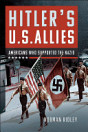
Hitler's U.S. Allies: Americans Who Supported the Nazis
Aug 2024 · Frontline Books
Ebook
192
Pages
family_home
Eligible
info
About this ebook
In many countries around the world, the end of the First World War, far from leading to a new world order of stability, ushered in an era of uncertainty and economic decline. To solve the problems of unemployment, high inflation, low wages and poor working conditions, many turned to the political right for a solution – to leaders such as Mussolini and Hitler. But it was not only in countries such as Italy and Germany that people saw fascism as an alternative to democracy. It is sometimes said fascism in America first manifested itself as a reaction by a native-born population to the surge in the numbers of European immigrants in 1830. It went on to find a voice at least another four times up to the outbreak of the Second World War, most obviously in the formation of the German American Bund. American politicians and commentators have traditionally avoided applying the label of ‘fascist’ to any movement, preferring instead to describe extreme right-wing groups as ‘nativist’, money-making rackets exploiting gullible followers, or simply the ‘lunatic fringe’. For many years this denied them the opportunity to examine the possibility that American fascist ideologies or social structures were rooted in patterns of the American past, as opposed to being a foreign import. The Ku Klux Klan has been described as the world’s first fascist organization and this book looks at the arguments for and against that assertion. It also examines how the philosophy behind that movement remained as a potent undercurrent in American politics up to the start of the Second World War. There is also an examination of how American racial policies were used by the Nazis when drawing up their own. while argument persists over whether movements such as the Silver Shirts and the Friends of New Germany were truly fascist, it is undoubtedly the case that personalities behind them, individuals such as William Dudley Pelley and Father Charles Coughlin, exhibited all the classic characteristics of fascism. And they were by no means unpopular. A proponent of many of Hitler’s policies, during the 1930s, when the US population was about 120 million, an estimated 30 million listeners, for example, tuned in to Coughlin’s weekly radio program. This book compares the ways that both the United States and fascist regimes, especially that in Germany, tackled the immense social and economic problems resulting from the Great Depression. It also explores the way that European fascist regimes, especially that in Nazi Germany, tried to influence the American political process both legally and illegally and analyses the level of success they achieved in both.
In many countries around the world, the end of the First World War, far from leading to a new world order of stability, ushered in an era of uncertainty and economic decline. To solve the problems of unemployment, high inflation, low wages and poor working conditions, many turned to the political...
Discover more
About the author
Norman Ridley is an Open University Honours graduate and a writer on inter-war intelligence. He lives in the Channel Islands.
Norman Ridley is an Open University Honours graduate and a writer on inter-war intelligence. He lives in the Channel Islands.
Rate this ebook
Tell us what you think.
Reading information
Smartphones and tablets
Install the Google Play Books app for Android and iPad/iPhone. It syncs automatically with your account and allows you to read online or offline wherever you are.
Laptops and computers
You can listen to audiobooks purchased on Google Play using your computer's web browser.
eReaders and other devices
To read on e-ink devices like Kobo eReaders, you'll need to download a file and transfer it to your device. Follow the detailed Help Center instructions to transfer the files to supported eReaders.