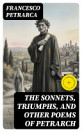
Petrarch, the First Modern Scholar and Man of Letters: A Selection from His Correspondence with Boccaccio and Other Friends, Designed to Illustrate the Beginnings of the Renaissance
Francesco Petrarca
May 2022 · DigiCat
Ebook
290
Pages
family_home
Eligible
info
About this ebook
In "Petrarch, the First Modern Scholar and Man of Letters," Francesco Petrarca offers a profound introspection into the cultural and intellectual currents of the Renaissance period. This seminal work oscillates between personal narrative and scholarly analysis, deftly revealing Petrarch's role in the rebirth of classical literature and the burgeoning humanist philosophy. Employing a reflective and eloquent prose style, Petrarca's writing not only illuminates the historical context of his time but also redefines the parameters of scholarly inquiry, positioning himself as a pivotal figure who bridged the medieval and modern worlds. Through an exploration of poetic forms and expressions of individuality, the book establishes a foundation for modern literary discourse. Francesco Petrarca, often hailed as the father of humanism, was greatly influenced by his initial exposure to classical texts in his youth. His deep admiration for antiquity fueled his lifelong quest for wisdom and self-understanding, all of which are encapsulated in this enlightening work. With his innovative approach to poetry and scholarship, Petrarca laid the groundwork for future generations, urging them to engage critically with both literature and the self. "Petrarch, the First Modern Scholar and Man of Letters" is recommended for readers seeking to grasp the transformative impact of Petrarch on Western thought and literature. This insightful exploration not only unveils the contours of a scholar's life but also serves as an invitation to reflect on the essence of human experience, making it a vital addition to any literary enthusiast's collection.
In "Petrarch, the First Modern Scholar and Man of Letters," Francesco Petrarca offers a profound introspection into the cultural and intellectual currents of the Renaissance period. This seminal work oscillates between personal narrative and scholarly analysis, deftly revealing Petrarch's role in...
About the author
Francesco Petrarca, known in English as Petrarch (July 20, 1304 – July 19, 1374), was an Italian scholar, poet, and one of the earliest humanists. His work laid the foundation for what would later become the Renaissance humanism. Born in Arezzo, Tuscany, Petrarch spent most of his early life in Avignon and Carpentras, and later moved to Padua and then to Vaucluse in southern France. He is most renowned for his Italian poetry, notably the 'Canzoniere' ('Songbook') and the 'Trionfi' ('Triumphs'). However, his lasting contribution extends to his Latin writings, which impacted the philosophical and scholarly ethos of the time. Petrarch is often referred to as the 'First Modern Scholar and Man of Letters,' a designation which stems from his combined interest in classical culture and Christian philosophy, his promotion of establishing a library of all human knowledge, and his own epistolary legacy. His letters titled 'Epistolae familiares' and 'Seniles' offer a profound insight into the character and lifestyle of the 14th century literati. On top of his scholarly pursuits, Petrarch climbed Mont Ventoux, a feat which symbolizes the humanist ascent to greater knowledge through reflection on nature. His prose and poetic works have left a lasting legacy in literature, making him one of the preeminent figures in the history of Italian and European literature.
Francesco Petrarca, known in English as Petrarch (July 20, 1304 – July 19, 1374), was an Italian scholar, poet, and one of the earliest humanists. His work laid the foundation for what would later become the Renaissance humanism. Born in Arezzo, Tuscany, Petrarch spent most of his early life in A...
Rate this ebook
Tell us what you think.
Reading information
Smartphones and tablets
Install the Google Play Books app for Android and iPad/iPhone. It syncs automatically with your account and allows you to read online or offline wherever you are.
Laptops and computers
You can listen to audiobooks purchased on Google Play using your computer's web browser.
eReaders and other devices
To read on e-ink devices like Kobo eReaders, you'll need to download a file and transfer it to your device. Follow the detailed Help Center instructions to transfer the files to supported eReaders.