About this ebook
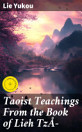
Rendered in standard Hanyu Pinyin with extensive scholarly supplements—chapter notes, bilingual glossaries, historical annotations and translator’s preface—the edition unpacks iconic tales: the Foolish Old Man moving mountains, the man who worried the sky would fall, Bo Ya and Zhong Ziqi’s sublime musical communion, and Yang Zhu’s radical individualist doctrines. It unpacks core Liezi concepts: guixu (venerating the Void), ziran (self-so spontaneity) and qiwu (equalizing all beings).
Distinguishing Daoist emptiness from passive nihilism, the text juxtaposes Confucian ethics, Yangist hedonism and ancient Chinese cosmology. Every fable balances lyrical literary charm with rigorous sinological analysis. Designed for academics, philosophy students and general readers of Eastern thought, this full translation bridges ancient Chinese wisdom and modern English-language scholarship, making Liezi’s quiet, liberating philosophy fully accessible to contemporary audiences.
About the author
Lie Yukou, known posthumously as Liezi, was a legendary pre‑Qin Daoist philosopher. The text bearing his name, Liezi, preserves his teachings, dialogues and fables exploring spontaneity, emptiness, human nature and the workings of the cosmos. Though compiled in later centuries, this classic anchors core strands of early Daoist thought alongside the Daodejing and Zhuangzi. Its allegories have shaped Chinese philosophy and literature for over two millennia.
Arthur Peng translates ancient Chinese philosophical texts into modern English. His annotated Liezi features chapter notes, pinyin and a bilingual glossary, aiming to faithfully convey the subtle philosophical and literary layers of this Daoist masterpiece for global readers.