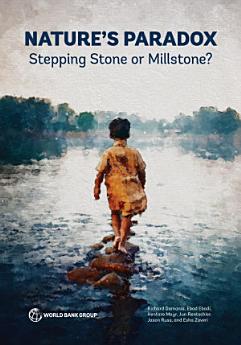
Nature's Paradox: Stepping Stone or Millstone?
May 2025 · World Bank Publications
Ebook
148
Pages
family_home
Eligible
info
About this ebook
Does access to natural resources and a clean environment provide a stepping stone out of deprivation, or does it act as a millstone that impedes the transition to greater progress? Nature's Paradox: Stepping Stone or Millstone? assesses the intersection of the two major crises of the 21st century—the growing scarcity of land, air, and water and rising vulnerability. As countries around the world grapple with multiple crises, local communities and the most vulnerable populations often bear the brunt of the impacts. Vulnerable and underrepresented groups predominantly reside in rural areas, are employed in agriculture, and have limited access to essential public services. While these groups may be less exposed to air and water pollution, the impact of their underrepresentation in decision-making processes is disproportionately high, likely due to a lack of public services and an inability to cope with environmental stresses. These groups also suffer more due to land degradation and deforestation, with the notable exception of Indigenous peoples in Latin America, who experience lower deforestation rates. Understanding the intersection of social vulnerability and environmental degradation helps address these dual crises more effectively. Through this thorough analysis, Nature's Paradox highlights how sound policy designs can create economic opportunities by promoting environmental sustainability. Its findings will interest policy makers, stakeholders, researchers, development practitioners, and the general public. Finally, Nature's Paradox explores additional dimensions of social exclusion, including poverty and gender disparities, and their interplay with the developed underrepresentation index, offering a more comprehensive understanding of the potential interconnections between social exclusion and environmental hazards. The analysis highlights the difficult choices socially excluded and underrepresented populations face between economic opportunities and environmental quality. The report concludes with a call for policy designs to ensure that environmental sustainability efforts are equitable and that progress is environmentally sustainable.
Does access to natural resources and a clean environment provide a stepping stone out of deprivation, or does it act as a millstone that impedes the transition to greater progress? Nature's Paradox: Stepping Stone or Millstone? assesses the intersection of the two major crises of the 21st century...
Discover more
Rate this ebook
Tell us what you think.
Reading information
Smartphones and tablets
Install the Google Play Books app for Android and iPad/iPhone. It syncs automatically with your account and allows you to read online or offline wherever you are.
Laptops and computers
You can listen to audiobooks purchased on Google Play using your computer's web browser.
eReaders and other devices
To read on e-ink devices like Kobo eReaders, you'll need to download a file and transfer it to your device. Follow the detailed Help Center instructions to transfer the files to supported eReaders.