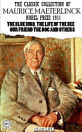
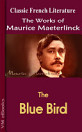
The Blue Bird: Restored Classics to Go Edition
About this ebook
Discover more
About the author
Maurice Maeterlinck was a Belgian writer, poet, and dramatist born in Ghent in 1862, who became one of the most distinctive voices of Symbolist literature and later won the Nobel Prize in Literature in 1911. Trained in law but drawn irresistibly to art and ideas, he turned away from a conventional legal career to write plays, essays, and philosophical works that explored the hidden forces shaping human life. His most celebrated achievements came in drama, where he transformed the stage into a realm of mood, silence, and suggestion, using simple settings and seemingly ordinary characters to probe fate, mortality, love, and the mystery of existence. He also wrote influential essays on nature, spirituality, and the inner life, always returning to the question of how human beings confront what they cannot fully understand. Maeterlinck's work remains relevant today because it speaks to uncertainty, vulnerability, and the search for meaning in a world that often feels opaque and unstable. His fascination with unseen pressures and quiet revelations still resonates with modern readers living amid anxiety, change, and the desire for hope. He died in 1949, leaving behind a legacy as a pioneer of atmospheric drama and philosophical literature whose influence can be felt in later theater, poetry, and even film. Readers who enjoy lyrical writing, symbolic storytelling, and thoughtful explorations of life's deeper questions will find him especially rewarding.