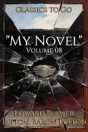
"My Novel": Restored Classics to Go Edition
About this ebook
Discover more
About the author
Edward Bulwer-Lytton, later Baron Lytton, was one of the most versatile and prolific English writers of the nineteenth century, a man whose life moved easily between literature, politics, and public controversy. Born into an aristocratic family in 1803, he was educated at Cambridge and went on to build a career that made him a central figure in Victorian letters as well as a member of Parliament and later a peer of the realm. He achieved remarkable success across many forms, from historical fiction and social novels to Gothic tales, drama, and essay writing, and he helped define the popular novel for a wide reading public. His work often explores ambition, class, money, moral choice, and the tensions between appearance and reality, while also showing a keen interest in the pressures of modern life and the possibilities of self-making. Though sometimes dismissed by later critics, his influence on the development of the novel was substantial, and his storytelling flair, memorable characters, and gift for suspense still appeal to readers today. He remains relevant because he captures a society in transition, where status, power, and personal conscience collide in ways that feel surprisingly contemporary. Readers who enjoy richly plotted Victorian fiction, social observation, and novels that combine entertainment with insight will find much to admire in his work.