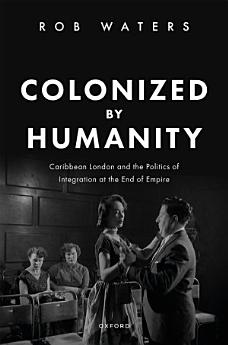
Colonized by Humanity: Caribbean London and the Politics of Integration at the End of Empire
Sep 2023 · Oxford University Press
Ebook
368
Pages
Tools
info
family_home
Eligible
info
About this ebook
'Colonization through a process of affection', wrote the London-based Barbadian novelist George Lamming in 1960, was 'the worst form of colonization'. Lamming's London was marked by the violent currents of racism—some seen, many disavowed. But the operations of race, the putting-in-place of its hierarchies, the destructions of the self that its logics entailed, exceeded only expressions of violence and hatred. It was in 'affection', too, that colonialism's racial visions operated. It was not only among the illiberals, but among the liberals, that colonization continued its hold on metropolitan culture. This was colonization, as Lamming would also put it, by humanity. Colonized by Humanity is a study of racial liberalism at the end of empire. It uncovers the projects to cultivate racial integration developed in the two decades between the arrival of the Empire Windrush and the passage of the first Race Relations Act. These were the years that integrationism took hold as a social phenomenon, its reflexes lodged deep in an English culture that took the idea of 'tolerance' as its watchword. It was a culture that re-inscribed race even as it aimed at overcoming its discriminations. Caribbean London is at the heart of this story. It was in the capital that integration projects multiplied fastest, and it was the multicultural capital that provided integrationism's imaginative geographies. Viewing integrationism through the eyes of Caribbean Londoners, Colonized by Humanity allows us to see it as they did, with its colonial and racial dynamics up close.
'Colonization through a process of affection', wrote the London-based Barbadian novelist George Lamming in 1960, was 'the worst form of colonization'. Lamming's London was marked by the violent currents of racism—some seen, many disavowed. But the operations of race, the putting-in-place of its h...
Discover more
About the author
Dr Rob Waters is Senior Lecturer in Modern British History at Queen Mary University of London. He is the author of Thinking Black: Britain, 1964-1985, which was shortlisted for the Royal Historical Society's 2020 Whitfield Prize.
Dr Rob Waters is Senior Lecturer in Modern British History at Queen Mary University of London. He is the author of Thinking Black: Britain, 1964-1985, which was shortlisted for the Royal Historical Society's 2020 Whitfield Prize.
Rate this ebook
Tell us what you think.
Reading information
Smartphones and tablets
Install the Google Play Books app for Android and iPad/iPhone. It syncs automatically with your account and allows you to read online or offline wherever you are.
Laptops and computers
You can listen to audiobooks purchased on Google Play using your computer's web browser.
eReaders and other devices
To read on e-ink devices like Kobo eReaders, you'll need to download a file and transfer it to your device. Follow the detailed Help Center instructions to transfer the files to supported eReaders.