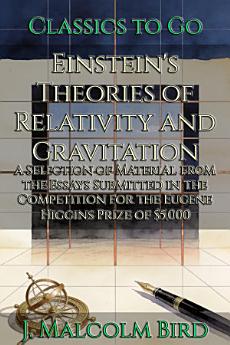
Einstein's Theories of Relativity and Gravitation: Restored Classics to Go Edition
About this ebook
Discover more
About the author
J. Malcolm, born James Malcolm Bird, was a British-born writer, editor, and popularizer of science who helped make complex ideas feel accessible to a broad reading public in the early twentieth century. Working at a time when physics was undergoing one of its most dramatic revolutions, he became known for translating difficult scientific debates into clear, engaging prose for general audiences. His career reflected a deep commitment to public education and intellectual curiosity, and his most notable literary contribution came through his editorial and explanatory work on the new theories of relativity and gravitation, a subject that captured the imagination of readers far beyond the laboratory. Bird's writing often centered on the excitement of discovery, the challenge of new knowledge, and the human effort behind scientific progress, themes that still resonate today in an age shaped by rapid technological change and public debate over science. His significance lies not only in what he explained, but in how he helped ordinary readers approach modern physics with confidence rather than fear, making him an important figure in the history of science communication. For contemporary readers, his work remains relevant as a model of clear thinking and accessible explanation, and he will especially appeal to those interested in the history of science, early popular physics, and the writers who helped bring transformative ideas into everyday conversation.