Rhetorical Argumentation: Principles of Theory and Practice
About this ebook
Rhetorical Argumentation uniquely presents argumentation through the idea of an invitational rhetoric by encouraging readers to think about the ways in which they encounter arguments. The book explores the processes involved in the argumentative exchanges between arguers and audiences-thus, emphasizing the collaborative nature of the arguer-audience relationship in the argumentative situation. That is, argument is presented not as a set of ideas imposed upon a passive audience, but rather as a dynamic exchange wherein the audience is involved in self-persuasion.
Key Features:
Explores the ancient foundations of rhetoric, from Aristotle to the relatively contemporary works of Perelman and Olbrechts-Tytecta, Toulmin, and Bakhtin
Includes numerous examples illustrating the ways in which the reasoning within arguments involves the audience from premise through to conclusion
Presents the idea of "dialogism" drawn from the theories of Mikhail Bakhtin to create a more dynamic and interactive sense of the argumentative context
Examines current theory as well as the historical relationship between argument and rhetoric
Provides detailed discussions of topics such as nature of the dialogical, rhetorical context, audiences, and standards of appraisal.
Rhetorical Argumentation is designed to provide advanced undergraduate and graduate students with a clear understanding of the rhetorical view of argumentation and how it can be effective in contemporary society. The book is an ideal text for courses in Communication, Rhetoric, Argumentation, Informal Logic, Critical Thinking, and Conflict Resolution.
Discover more
About the author
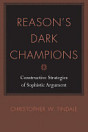
Christopher Tindale (Ph.D. & M.A., University of Waterloo; B.A., Wilfrid Laurier University) teaches and conducts research in the areas of argumentation theory, ethics, and ancient philosophy. Since 2000, he′s been an editor of the journal Informal Logic: Reasoning and Argumentation in Theory and Practice, and he presently sits on the editorial board of Controversia. He is the author of Acts of Arguing: A Rhetorical Model of Argument (SUNY Press, 1999), co-author of Good Reasoning Matters, Third Edition (Oxford University Press, 2004), and co-editor of Argumentation and Its Applications (forthcoming CD-Rom) and two other CD-ROMs, Argumentation at the Century′s Turn and Argumentation and Rhetoric. Recent work of his has appeared in the following journals: Argumentation; Informal Logic; ProtoSociology; Social Theory and Practice. In addition to teaching at Trent University, in 2001-2002 he was a research fellow at the Centre for Interdisciplinary Research), Bielefeld, Germany.