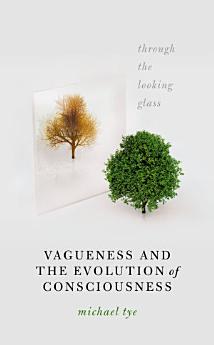
Vagueness and the Evolution of Consciousness: Through the Looking Glass
Jul 2021 · Oxford University Press
Ebook
144
Pages
Tools
info
family_home
Eligible
info
About this ebook
When Alice stepped through the looking-glass, she encountered a peculiar world where she meets animated chess pieces, characters from nursery rhymes, and talking animals. Everything there is inside out and upside down: so it is with consciousness. Reflecting on the inception of consciousness, it is natural to suppose that there are just two alternatives. Either consciousness appeared in living beings suddenly, like a light switch turning on, or it appeared gradually, like the biological development of life itself, through borderline cases which became the collective experience over time. For the former theory, consciousness is an on/off matter, but once it was there it became richer over time, like a beam of light becoming brighter and broader in its sweep. For the latter theory this is not the case, and there are shades of grey in how consciousness develops. Unfortunately, both alternatives face deep problems. The solution to these problems lies in the realization, strange as it may be, that a key element of consciousness itself was always here, as a fundamental feature of micro-reality. Varying conscious states were not, however: they appeared gradually. In Vagueness and the Evolution of Consciousness, Michael Tye addresses the questions that this raises. Where in the brain is consciousness located? How can consciousness be casually efficacious with respect to behaviour? What is the extent of consciousness in the animal world? How can all of this be so?
When Alice stepped through the looking-glass, she encountered a peculiar world where she meets animated chess pieces, characters from nursery rhymes, and talking animals. Everything there is inside out and upside down: so it is with consciousness. Reflecting on the inception of consciousness, it ...
About the author
Michael Tye is the Dallas TACA Centennial Professor in Liberal Arts at the University of Texas at Austin. He has taught at Temple University, St Andrews, and King's College, London. His main area of interest is consciousness, and he has also written on mental imagery, the nature of thought, and vagueness. He is the author of Tense Bees and Shell-Shocked Crabs (OUP, 2016).
Michael Tye is the Dallas TACA Centennial Professor in Liberal Arts at the University of Texas at Austin. He has taught at Temple University, St Andrews, and King's College, London. His main area of interest is consciousness, and he has also written on mental imagery, the nature of thought, and v...
Rate this ebook
Tell us what you think.
Reading information
Smartphones and tablets
Install the Google Play Books app for Android and iPad/iPhone. It syncs automatically with your account and allows you to read online or offline wherever you are.
Laptops and computers
You can listen to audiobooks purchased on Google Play using your computer's web browser.
eReaders and other devices
To read on e-ink devices like Kobo eReaders, you'll need to download a file and transfer it to your device. Follow the detailed Help Center instructions to transfer the files to supported eReaders.