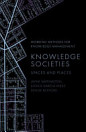
Knowledge Societies: Spaces and Places
May 2026 · Emerald Group Publishing
Ebook
328
Pages
Tools
info
family_home
Eligible
info
About this ebook
Over the past seventy years, the world has been transitioning from an advanced industrial society and economy to a knowledge society and economy. The term "knowledge society" has been used freely with little concrete definition or characterization. A society is a living thing – it is complex, constantly changing, and multifaceted. Invisible for many years, the pieces and effects of the transition are increasingly evident. Today, people sense that a change is afoot, but they do not have a clear understanding of the nature of the change or how it will affect them. They are challenged to see how they can position themselves to thrive in the new society. A fundamental myth about a knowledge society is that it is focused on people who work in high-profile roles, whose work is information and data-intensive. In fact, a knowledge society is one that values and leverages knowledge as capital and recognizes the knowledge capital of every member of that society. The book explains how spaces and places affect how knowledge capital is created, leveraged, shared, adapted and regenerated in everyday living, working and socializing. The authors draw on the rich thinking and literature on spaces and places to illustrate these ideas in everyday life. The book fills a long-standing gap in the field of knowledge sciences and knowledge economics. It provides an anchor point for understanding the importance of the other aspects and subfields of knowledge management.
Over the past seventy years, the world has been transitioning from an advanced industrial society and economy to a knowledge society and economy. The term "knowledge society" has been used freely with little concrete definition or characterization. A society is a living thing – it is complex, con...
Discover more
About the author
Jayne Sappington – Texas Tech University (Retired), USA
Alexeis Garcia-Perez – Aston University, UK
Denise Bedford – Georgetown University, USA
Jayne Sappington – Texas Tech University (Retired), USA
Alexeis Garcia-Perez – Aston University, UK
Denise Bedford – Georgetown University, USA
Rate this ebook
Tell us what you think.
Reading information
Smartphones and tablets
Install the Google Play Books app for Android and iPad/iPhone. It syncs automatically with your account and allows you to read online or offline wherever you are.
Laptops and computers
You can listen to audiobooks purchased on Google Play using your computer's web browser.
eReaders and other devices
To read on e-ink devices like Kobo eReaders, you'll need to download a file and transfer it to your device. Follow the detailed Help Center instructions to transfer the files to supported eReaders.