About this ebook
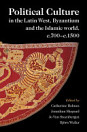
Pinning down Byzantium (or East Rome) is as difficult today as it was for contemporaries during its 1,000-year-long existence. Dimitri Obolensky sought to characterize its impact on Eastern Europe in his classic The Byzantine Commonwealth, focusing on the elements of religious doctrine, rites, and law which ruling elites there took from the emperor acting in tandem with the Constantinopolitan patriarchate. Chapters in this volume, Revisiting the Byzantine Commonwealth, address such basic questions as who the Byzantines thought they were and how they managed to maintain their hegemonial stance for so long. Other chapters reappraise the uses of Byzantium to elites and also to other sectors of societies from the Upper Adriatic to the Volga. Surveys are offered of three spheres which functioned independently of (and in one case, expressly in antithesis to) Byzantium, yet which overlapped and were constantly interacting with it--the Latin west, the Islamic-Christian east, and the world of the steppes. Candidates for 'Commonwealth membership' can be found within these spheres, too, along with transregional networks which functioned regardless of political borders. Aspects of Byzantium appealed to the variegated societies and cultures around it in very different ways, with the imperial elite taking keen interest in neighbouring peoples and making the most of Soft Power as material resources dwindled from the thirteenth century on. Some periods of outsiders' engagement with the empire were short-lived, but others proved long-lasting, underpinned by ecclesiastical institutions and monastic networks. The volume aims to foster a more rounded approach to the phenomenon of Byzantium, and a better understanding of how and why it impinges on so many Eurasian cultures and polities to this day.
Pinning down Byzantium (or East Rome) is as difficult today as it was for contemporaries during its 1,000-year-long existence. Dimitri Obolensky sought to characterize its impact on Eastern Europe in his classic The Byzantine Commonwealth, focusing on the elements of religious doctrine, rites, an...
Discover more
About the author
Jonathan Shepard is a Research Associate at the Faculty of History, University of Oxford and was for many years University Lecturer in Russian History at the University of Cambridge. Peter Frankopan is Professor of Global History at the University of Oxford, where he is Director of the Oxford Centre for Byzantine Research and Senior Research Fellow at Worcester College, Oxford. He is also UNESCO Professor of Silk Roads Studies and a Bye-Fellow at King's College, Cambridge.
Jonathan Shepard is a Research Associate at the Faculty of History, University of Oxford and was for many years University Lecturer in Russian History at the University of Cambridge. Peter Frankopan is Professor of Global History at the University of Oxford, where he is Director of the Oxford Cen...
Rate this ebook
Tell us what you think.
Reading information
Smartphones and tablets
Install the Google Play Books app for Android and iPad/iPhone. It syncs automatically with your account and allows you to read online or offline wherever you are.
Laptops and computers
You can listen to audiobooks purchased on Google Play using your computer's web browser.
eReaders and other devices
To read on e-ink devices like Kobo eReaders, you'll need to download a file and transfer it to your device. Follow the detailed Help Center instructions to transfer the files to supported eReaders.