The Kingdom of Infinite Number: A Field Guide
About this ebook
"Here is the guide to numbers that we have all been waiting for. It's the perfect bedside reader, chock full of lots of interesting math you can absorb one number at a time." —Colin C. Adams, Mark Hopkins Professor of Mathematics, Williams College
Just as bird guides help watchers tell birds apart by their color, songs, and behavior, The Kingdom of Infinite Number is the perfect handbook for identifying numbers in their native habitat. Taking a field guide-like approach, it offers a fresh way of looking at individual numbers and the properties that make them unique, which are also the properties essential for mental computation. The result provides new insights into mathematical patterns and relationships and an increased appreciation for the sheer wonder of numbers.
Every number in this book is identified by its "field marks," "similar species," "personality," and "associations." For example, one field mark of the number six is that it is the first perfect number—the sum of its divisors (one, two, and three) is equal to the number itself. Thus twenty-eight, the next perfect number, is a similar species. And the fact that six can easily be broken into two and three is part of its personality, a trait that is helpful when large numbers are being either multiplied or divided by six. Associations with six include its relationship to the radius of a circle. In addition to such classifications, special attention is paid to dozens of other fascinating numbers, including zero, pi, ten to the 76th power (the number of particles in the universe), transfinite and other exceptionally larger numbers, and the concept of infinity.
Ideal for beginners but organized to appeal to the mathematically literate, The Kingdom of Infinite Number will not only add to readers' enjoyment of mathematics, but to their problem-solving abilities as well.
Discover more
About the author
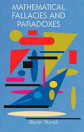
Bryan Bunch has extensive experience as a writer and editor in the math and science fields. The editor of The Family Encyclopedia of Diseases, he is also the co-author, with Alexander Hellemans, of The Timetables of Science, and the author of Mathematical Fallacies and Paradoxes and Reality's Mirror: Exploring the Mathematics of Symmetry, which was named one of the year's best science books by Library Journal.