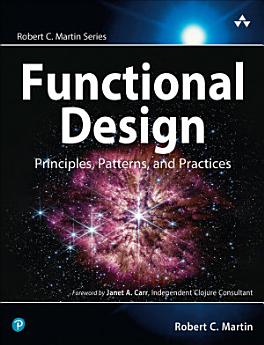
Functional Design: Principles, Patterns, and Practices
About this ebook
In Functional Design, renowned software engineer Robert C. Martin ("Uncle Bob") explains how and why to use functional programming to build better systems for real customers. Martin compares conventional object-oriented coding structures in Java to those enabled by functional languages, identifies the best roles for each, and shows how to build better systems by judiciously using them in context.
Martin's approach is pragmatic, minimizing theory in favor of "in the-trenches" problem-solving. Through accessible examples, working developers will discover how the easy-to-learn, semantically rich Clojure language can help them improve code cleanliness, design, discipline, and outcomes. Martin examines well-known SOLID principles and Gang of Four Design Patterns from a functional perspective, revealing why patterns remain extremely valuable to functional programmers, and how to use them to achieve superior results.
- Understand functional basics: immutability, persistent data, recursion, iteration, laziness, and statefulness
- Contrast functional and object approaches through expertly crafted case studies
- Explore functional design techniques for data flow
- Use classic SOLID principles to write better Clojure code
- Master pragmatic approaches to functional testing, GUIs, and concurrency
- Make the most of design patterns in functional environments
- Walk through building an enterprise-class Clojure application
"Functional Design exudes 'classic-on-arrival'. Bob pulls back the curtain to reveal how functional programming elements make software design simple yet pragmatic. He does so without alienating experienced object-oriented programmers coming from languages like C#, C++, or Java."
--Janet A. Carr, Independent Clojure Consultant
Register your book for convenient access to downloads, updates, and/or corrections as they become available. See inside book for details.
Ratings and reviews

- Flag inappropriate
About the author
Robert C. Martin ("Uncle Bob") wrote his first line of code at the age of 12 in 1964 and has been employed as a programmer since 1970. He is cofounder of cleancoders.com, offering online video training for software developers, and is founder of Uncle Bob Consulting LLC, offering software consulting, training, and skill development services to major corporations worldwide. He served as the Master Craftsman at 8th Light, Inc., a Chicago-based software consulting firm. Mr. Martin has published dozens of articles in various trade journals, authored many books, and is a regular speaker at international conferences and trade shows.


