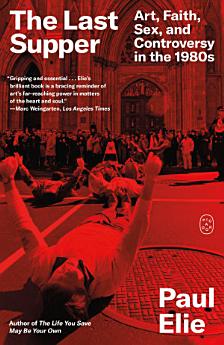
The Last Supper: Art, Faith, Sex, and Controversy in the 1980s
May 2025 · Sold by Farrar, Straus and Giroux
Ebook
496
Pages
family_home
Eligible
info
About this ebook
Named a Best Book of the Year by the Washington Post and Los Angeles Times | Named an Essential Read by The New Yorker
This enthralling group portrait brings to life a moment when popular culture became the site of religious strife—strife that set the stage for some of the most salient political and cultural clashes of our day.
Circa 1980, tradition and authority are in the ascendant, both in Catholicism (via Pope John Paul II) and in American civic life (through the Moral Majority and the so-called televangelists). But the public is deeply divided on issues of body and soul, devotion and desire.
Enter the figures Paul Elie calls “crypto-religious.” Here is Leonard Cohen writing “Hallelujah” on his knees in a Times Square hotel room; Andy Warhol adapting Leonardo’s The Last Supper in response to the AIDS pandemic; Prince making the cross and altar into “signs o’ the times.” Through Toni Morrison, spirits speak from the grave; Patti Smith and Bruce Springsteen deepen the tent-revival intensity of their work; Wim Wenders offers an angel’s-eye view of Berlin; U2, the Neville Brothers, and Sinéad O’Connor reckon with their Christian roots in music of mystic yearning. And Martin Scorsese overcomes fundamentalist ire to make The Last Temptation of Christ—a struggle that anticipates Salman Rushdie’s struggle with Islam in The Satanic Verses.
In Elie’s acclaimed first book, The Life You Save May Be Your Own, Catholic writers ventured out into the wilds of postwar America; in this book, creative figures who were raised religious go to the margins of conventional belief, calling forth controversy. Episodes such as the boycott sparked by Madonna’s “Like a Prayer” video and the tearing-up of Andres Serrano’s Piss Christ in Congress are early skirmishes in the culture wars—but here the creators (not the politicians) are the protagonists, and the work they make speaks to conflicts that remain unsettled.
The Last Supper explores the bold and unexpected forms an encounter with belief can take. It traces the beginnings of our postsecular age, in which religion is at once surging and in decline. Through a propulsive narrative, it reveals the crypto-religious imagination as complex, credible, daring, and vividly recognizable.
Named a Best Book of the Year by the Washington Post and Los Angeles Times | Named an Essential Read by The New Yorker
This enthralling group portrait brings to life a moment when popular culture became the site of religious strife—strife that set the stage for some of the most salient politica...
Discover more
About the author
Paul Elie is the author of The Life You Save May Be Your Own and Reinventing Bach, both National Book Critics Circle Award finalists. He is a senior fellow at Georgetown University’s Berkley Center for Religion, Peace, and World Affairs, and a regular contributor to The New Yorker. He lives in Brooklyn.
Paul Elie is the author of The Life You Save May Be Your Own and Reinventing Bach, both National Book Critics Circle Award finalists. He is a senior fellow at Georgetown University’s Berkley Center for Religion, Peace, and World Affairs, and a regular contributor to The New Yorker. He lives in Br...
Rate this ebook
Tell us what you think.
Reading information
Smartphones and tablets
Install the Google Play Books app for Android and iPad/iPhone. It syncs automatically with your account and allows you to read online or offline wherever you are.
Laptops and computers
You can listen to audiobooks purchased on Google Play using your computer's web browser.
eReaders and other devices
To read on e-ink devices like Kobo eReaders, you'll need to download a file and transfer it to your device. Follow the detailed Help Center instructions to transfer the files to supported eReaders.