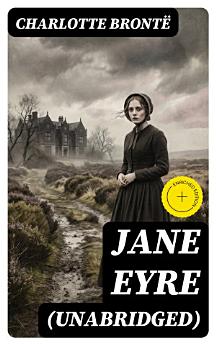
Jane Eyre (Unabridged): Enriched edition.
Dec 2023 · DigiCat
Ebook
484
Pages
family_home
Eligible
info
About this ebook
In 'Jane Eyre,' Charlotte Brontë weaves a rich tapestry of emotional depth and moral complexity, encapsulating the life of a resilient orphan who evolves into a strong-willed governess. Through its masterful use of the first-person narrative, Brontë employs a gothic literary style that encapsulates both the romance and the darker elements of Victorian society. The novel explores themes of social criticism, gender inequality, and the quest for identity and autonomy, culminating in Jane's steadfast pursuit of love and self-worth within a repressive social framework. Brontë's vivid characterizations and evocative prose paint a poignant picture of Jane's struggles and triumphs, marking the work as a seminal piece in the canon of English literature. Charlotte Brontë, one of the renowned Brontë sisters, was heavily influenced by her own experiences of isolation and societal constraints, which permeate her writing. The challenges she faced as a woman in the 19th century, combined with a profound sense of imagination and a deep understanding of emotional resilience, inspired Brontë to create Jane, a character who challenges societal norms and embodies the complexity of the human spirit. This personal narrative reflects her own battles against adversity. 'Jane Eyre' is highly recommended for readers seeking an exploration of intense personal and social themes within a richly constructed narrative. Its timeless relevance continues to resonate, offering insight into the struggles for individual identity and self-definition. For those intrigued by the intricacies of human emotion, relationship dynamics, and the quest for autonomy against societal expectations, Brontë's masterpiece promises to deliver both depth and inspiration. In this enriched edition, we have carefully created added value for your reading experience: - A succinct Introduction situates the work's timeless appeal and themes. - The Synopsis outlines the central plot, highlighting key developments without spoiling critical twists. - A detailed Historical Context immerses you in the era's events and influences that shaped the writing. - An Author Biography reveals milestones in the author's life, illuminating the personal insights behind the text. - A thorough Analysis dissects symbols, motifs, and character arcs to unearth underlying meanings. - Reflection questions prompt you to engage personally with the work's messages, connecting them to modern life. - Hand‐picked Memorable Quotes shine a spotlight on moments of literary brilliance. - Interactive footnotes clarify unusual references, historical allusions, and archaic phrases for an effortless, more informed read.
In 'Jane Eyre,' Charlotte Brontë weaves a rich tapestry of emotional depth and moral complexity, encapsulating the life of a resilient orphan who evolves into a strong-willed governess. Through its masterful use of the first-person narrative, Brontë employs a gothic literary style that encapsulat...
Discover more
About the author
Charlotte Brontë (1816–1855), an English novelist and poet, was a seminal figure in the literary world of the 19th century. Known for her fervent prose and innovative narrative style, she was born on April 21, 1816, in the village of Thornton, West Yorkshire, England. Brontë was the third of six children, and along with her sisters Emily and Anne, she emerged as part of a trio of literary siblings. She first published her works, including the world-renowned novel 'Jane Eyre' (1847), under the male pseudonym Currer Bell in order to circumvent the pervasive gender biases of her time (Smith, 1997). 'Jane Eyre', an immediate success, was groundbreaking in its first-person narrative and complex moral characterizations. The novel, which follows the life of its titular heroine from childhood to adulthood, is deeply infused with autobiographical elements and distinguished by its exploration of themes such as social criticism, moral growth, and the struggle for independence. Brontë's acute understanding of the human psyche and society, and her direct challenge to Victorian morality and classism, distinguished her as a forerunner for both feminist and social critique within literature (Gaskell, 1857). Her other works, such as 'Shirley' and 'Villette,' also well-received, delve into similar themes, but 'Jane Eyre' remains her most enduring creation. Charlotte Brontë's legacy resides not merely in her literary creations but in the barrier she broke for women writers who followed.
Charlotte Brontë (1816–1855), an English novelist and poet, was a seminal figure in the literary world of the 19th century. Known for her fervent prose and innovative narrative style, she was born on April 21, 1816, in the village of Thornton, West Yorkshire, England. Brontë was the third of six ...
Rate this ebook
Tell us what you think.
Reading information
Smartphones and tablets
Install the Google Play Books app for Android and iPad/iPhone. It syncs automatically with your account and allows you to read online or offline wherever you are.
Laptops and computers
You can listen to audiobooks purchased on Google Play using your computer's web browser.
eReaders and other devices
To read on e-ink devices like Kobo eReaders, you'll need to download a file and transfer it to your device. Follow the detailed Help Center instructions to transfer the files to supported eReaders.