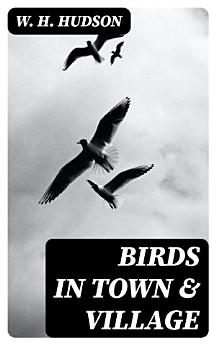
Birds in Town & Village
W. H. Hudson
Aug 2022 · DigiCat
Ebook
179
Pages
family_home
Eligible
info
About this ebook
In "Birds in Town & Village," W. H. Hudson presents a profound exploration of avian life interwoven with the human experience. Through a combination of meticulous observation and poetic prose, Hudson captures the intricate behaviors and characteristics of various bird species as they adapt to urban and rural environments. The book is not merely a straightforward natural history; it delves into the philosophical relationship between humans and nature, showcasing Hudson's rich literary style that combines elements of romanticism with scientific inquiry, set against the backdrop of a rapidly industrializing Britain. W. H. Hudson, a naturalist and writer born in Argentina and later residing in England, developed a deep appreciation for nature from an early age. His diverse background and early experiences in the Pampas ignited his fascination with wildlife, ultimately influencing his literary career. Hudson wrote passionately about the need to appreciate and protect the natural world, making "Birds in Town & Village" a vital contribution to both ornithology and environmental literature. Recommended for bird enthusiasts, nature lovers, and literary scholars, this work offers a unique lens through which to view the complexities of urban wildlife. Hudson's blend of science, art, and philosophical reflection invites readers to reconsider their own connections to the avian inhabitants around them.
In "Birds in Town & Village," W. H. Hudson presents a profound exploration of avian life interwoven with the human experience. Through a combination of meticulous observation and poetic prose, Hudson captures the intricate behaviors and characteristics of various bird species as they adapt to urb...
About the author
William Henry Hudson (1841 – 1922) was an author, naturalist, and ornithologist, known for his evocative writing that merges a deep fascination with nature with a distinctive literary style. Born in Argentina to American settler parents, Hudson's early exposure to the untamed landscapes of South America deeply influenced his literary voice, which he would later fuse with his experiences in England where he moved in 1874. His semi-autobiographical work, 'Far Away and Long Ago' (1918), reflects this bi-continental life journey. Hudson's passion for ornithology is epitomal in the title 'Birds in Town & Village' (1919), which showcases his naturalist's eye and eloquent prose to convey birds' lives amid changing habitats, reflecting a prescient environmental awareness. His works often interlace keen observation with philosophical musings, characterizing Hudson as a forerunner in merging ecological themes with literature. His narrative style is marked by detailed natural description and a pensive, often romantic, tone. Hudson's contributions extend beyond his books; he was influential in the foundation of the Royal Society for the Protection of Birds (RSPB). His enduring legacy is encapsulated in the W.H. Hudson Society, dedicated to celebrating and preserving his work and ethos in literature and natural history.
William Henry Hudson (1841 – 1922) was an author, naturalist, and ornithologist, known for his evocative writing that merges a deep fascination with nature with a distinctive literary style. Born in Argentina to American settler parents, Hudson's early exposure to the untamed landscapes of South ...
Rate this ebook
Tell us what you think.
Reading information
Smartphones and tablets
Install the Google Play Books app for Android and iPad/iPhone. It syncs automatically with your account and allows you to read online or offline wherever you are.
Laptops and computers
You can listen to audiobooks purchased on Google Play using your computer's web browser.
eReaders and other devices
To read on e-ink devices like Kobo eReaders, you'll need to download a file and transfer it to your device. Follow the detailed Help Center instructions to transfer the files to supported eReaders.