About this ebook
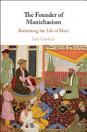
Mani or Manichaios was a major religious figure in early Sasanian Mesopotamia (third century CE) renowned as a healer, a visionary, an artist, and a public sage. The community that he founded, the religion of Manichaeism, spread across Eurasia from the late Roman world of the Mediterranean to south China, where it lasted into the early modern period. Due to its prominent success in Central Asia through the latter part of the first millennium, it played a major role as a conduit for ideas, literatures, and practices between east and west. Mani authored many letters in Aramaic during the years of his public mission (ca. 240–270s CE). These letters were collected together to become one 'book' in his new scriptures and the letters were regarded as canonical by followers of Manichaeism. They were translated into numerous languages and read for centuries as guides to life and faith, as well as being utilized in liturgical contexts. No complete version of The Letters survives from antiquity, but there are many remnants and quotations scattered across a diverse set of sources and languages: lengthy citations from individual letters in Latin preserved by Augustine of Hippo and his circle; codex pages preserved in Coptic and Middle Persian recovered during the twentieth century from Egypt and Xinjiang; references throughout other Manichaean literature in Coptic, Sogdian, Uighur, Chinese etc.; a list of titles preserved in Arabic by Ibn al-Nadīm; and forgeries used in polemical texts that circulated in the ancient world. This major new study, the first ever dedicated to the topic, contains both a detailed study of the available evidence and a new English translation of all the relevant texts, citations, and allusions. A considerable amount of the material included is either entirely new to scholarship or only known to a small circle of specialists working on original manuscripts in diverse languages.
Mani or Manichaios was a major religious figure in early Sasanian Mesopotamia (third century CE) renowned as a healer, a visionary, an artist, and a public sage. The community that he founded, the religion of Manichaeism, spread across Eurasia from the late Roman world of the Mediterranean to sou...
Discover more
About the author
Iain Gardner is Emeritus Professor of the History of Religions at the University of Sydney. He was appointed to a Lectureship in Early Christian Studies at the University of Kent at Canterbury in 1979 and received his Doctorate from the University of Manchester on 'The Christology of Manichaeism' in 1983. Professor Gardner emigrated to Australia in 1986 and after several years at Edith Cowan University in Western Australia, he was appointed as Chair of the Department of Studies in Religion at the University of Sydney in 1998. He is a Fellow of the Australian Academy of Humanities.
Iain Gardner is Emeritus Professor of the History of Religions at the University of Sydney. He was appointed to a Lectureship in Early Christian Studies at the University of Kent at Canterbury in 1979 and received his Doctorate from the University of Manchester on 'The Christology of Manichaeism'...
Rate this ebook
Tell us what you think.
Reading information
Smartphones and tablets
Install the Google Play Books app for Android and iPad/iPhone. It syncs automatically with your account and allows you to read online or offline wherever you are.
Laptops and computers
You can listen to audiobooks purchased on Google Play using your computer's web browser.
eReaders and other devices
To read on e-ink devices like Kobo eReaders, you'll need to download a file and transfer it to your device. Follow the detailed Help Center instructions to transfer the files to supported eReaders.