About this ebook
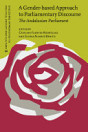
Topics covered in this book include the study of political discourse styles, the use of rhetorical strategies (vocabulary, metaphors, quotations, parentheticals, etc.), the relation between political discourse and society (legitimization, the private-public interface, identities), role of gestures in relation to speech, methods for analysing political discourse, and how to build and exploit a political language corpus.
About the author
GABRIELA FERNANDEZ-DIAZ is a Lecturer at the Department of English Language and Linguistics (University of Seville). She holds a PhD in English Linguistics from the University of Seville and an MSc in Advanced Information Systems from the University of Glasgow (UK). Her research interests include Natural Language Processing, Computer-Assisted Translation, Discourse Analysis and Corpus Linguistics. Her main contribution to the field of Discourse Analysis is: “A Model for the Linguistic Specification and the Computational Management of Man-Machine Dialogues Following Commands Issued in Spoken Natural Language” (Universal Publishers, 2005).
ISABEL M. IÑIGO-MORA is a Lecturer at the Department of English Language and Linguistics (University of Seville). She holds a PhD in English Linguistics from the University of Seville. Her research interest centers on discourse in general and political discourse in particular. She has written some works on political discourse and rhetoric. Some of her publications include: Comunicación y Discurso (2003), “On the Use of the Personal Pronoun we in Communities” (Journal of Language and Politics, 2004), “Extreme Case Formulations in Spanish Pre-Electoral Debates and English Panel Interviews” (Discourse Studies, 2007); “Evasion in political interviews: An analysis of televised interviews with Tony Blair” (Political Linguistics, 2007).