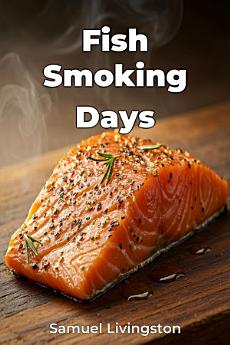
Fish Smoking Days
About this ebook
The book highlights the differences between cold smoking and hot smoking, crucial for understanding how temperature and wood type dramatically affect the final product. Readers will discover how smoking isn't just about taste, but also about the complex interplay of physics, chemistry, and microbiology that transforms fish into a preserved delicacy.
The book traces the historical roots of fish smoking, from its origins as a survival strategy to its evolution into a cultural art form. Different chapters explore how various cultures adapted smoking techniques to local fish species and available resources, creating unique and diverse traditions.
The book then transitions into a practical guide, offering step-by-step instructions for various smoking methods and addressing common challenges.
Ultimately, Fish Smoking Days argues that fish smoking is more than just a culinary technique; it's a vital part of food security and cultural identity. By combining scientific insights with practical knowledge and cultural context, the book offers a unique and comprehensive understanding of this fascinating practice, making it valuable for both culinary enthusiasts and those interested in food science and biology.