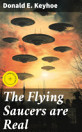
The Flying Saucers are Real
Donald E. Keyhoe
May 2022 · DigiCat
Ebook
142
Pages
family_home
Eligible
info
About this ebook
In "The Flying Saucers are Real," Donald E. Keyhoe offers a compelling exploration of UFO phenomena, positioning his narrative within the burgeoning context of 1950s America, marked by the Cold War and a growing fascination with the unknown. Keyhoe's journalistic background informs his pragmatic yet engaging literary style, combining investigative rigor with anecdotal descriptions that appeal to both skeptics and enthusiasts. The book challenges prevailing perceptions about extraterrestrial encounters, presenting an array of testimonies and purported evidence that suggest a reality beyond conventional understanding, thereby pioneering the discourse on unidentified flying objects. Keyhoe, a former Marine Corps officer and aviation writer, was profoundly influenced by his experiences in the military and a long-standing interest in aviation technology. His dedication to uncovering the truth behind UFO sightings stems from a genuine curiosity about humanity's place in the universe and the implications of advanced technology. These themes resonate throughout his work, making him a pivotal figure in the early UFO discourse of the 20th century. For readers intrigued by the intersection of science, technology, and the unknown, "The Flying Saucers are Real" serves as an essential primer on UFO phenomena, urging critical thought and open-mindedness. Keyhoe's meticulous research and persuasive narrative make this book a must-read for anyone interested in the mysteries that lie beyond our terrestrial existence.
In "The Flying Saucers are Real," Donald E. Keyhoe offers a compelling exploration of UFO phenomena, positioning his narrative within the burgeoning context of 1950s America, marked by the Cold War and a growing fascination with the unknown. Keyhoe's journalistic background informs his pragmatic ...
Discover more
About the author
Donald E. Keyhoe (1897 – 1988) was an American Marine Corps naval aviator, writer of both fiction and nonfiction, and one of the most influential figures in early ufology. Keyhoe's literary career began with adventure stories and expanded into science fiction, yet it was his interest in aerial phenomena that cemented his standing in literature and popular culture. His seminal work, 'The Flying Saucers are Real' (1950), was among the first to assert the extraterrestrial hypothesis regarding Unidentified Flying Objects (UFOs). Keyhoe approached the subject with a reporter's rigor and a pilot's pragmatism, arguing for a systematic investigation of these mysterious sightings. As the director of the National Investigations Committee on Aerial Phenomena (NICAP), he advocated for greater transparency from the US government regarding UFOs. With a style characterized by meticulous research and a straightforward presentation of evidence, Keyhoe's writings on the UFO phenomenon have had a lasting impact, shaping public perception and influencing both enthusiasts and skeptics in the field of ufology. His legacy includes not only 'The Flying Saucers are Real' but also subsequent books like 'Flying Saucers from Outer Space' (1953), which further explored his ideas and widened public discourse on the subject of UFOs and extraterrestrial life.
Donald E. Keyhoe (1897 – 1988) was an American Marine Corps naval aviator, writer of both fiction and nonfiction, and one of the most influential figures in early ufology. Keyhoe's literary career began with adventure stories and expanded into science fiction, yet it was his interest in aerial ph...
Rate this ebook
Tell us what you think.
Reading information
Smartphones and tablets
Install the Google Play Books app for Android and iPad/iPhone. It syncs automatically with your account and allows you to read online or offline wherever you are.
Laptops and computers
You can listen to audiobooks purchased on Google Play using your computer's web browser.
eReaders and other devices
To read on e-ink devices like Kobo eReaders, you'll need to download a file and transfer it to your device. Follow the detailed Help Center instructions to transfer the files to supported eReaders.