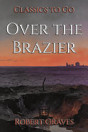
On English Poetry: Restored Classics to Go Edition

· Otbebookpublishing
Ebook
121
Pages
Eligible

About this ebook

Robert Graves's On English Poetry is a sharp, intimate meditation on what poetry is and why it still matters. Rather than offering a neat theory, Graves presents "irregular" reflections on rhythm, diction, inspiration, humour, rhyme, tradition, and the poet's place in society, arguing that poetry lives in the tension between instinct and craft, emotion and analysis. He defines it as a sudden fusion of conflicting feelings shaped by sound, suggestion, and control, not plain statement, and he contrasts true poetry with bad verse, fake poetry, and merely decorative language. Drawing on dream logic, primitive magic, Elizabethan drama, Coleridge, Housman, Blake, Keats, and Housman, Graves treats the poet as both inspired receiver and conscious transformer, almost a modern witch doctor who channels emotional conflict into form. He shows how great poems conceal meaning like a puzzle or dream, how one word can alter an entire atmosphere, and how even innocent lyrics often contain hidden tensions. At once provocative and playful, the book celebrates poetry's childlike wonder, sensory vividness, and enduring power to make emotion tangible. This edition has been fully restored with modern typesetting, custom cover design.
Robert Graves's On English Poetry is a sharp, intimate meditation on what poetry is and why it still matters. Rather than offering a neat theory, Graves presents "irregular" reflections on rhythm, diction, inspiration, humour, rhyme, tradition, and the poet's place in society, arguing that poetry...

About the author

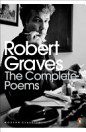
Robert Graves was a distinctive and often unruly voice in twentieth-century literature, born in London in 1895 and shaped by the upheavals of war, scholarship, and exile. Educated at Charterhouse and Oxford, he served in the First World War, an experience that left a deep mark on his imagination and his understanding of human frailty, violence, and survival. Over a long career that stretched across poetry, fiction, criticism, translation, and mythic scholarship, he became one of the most versatile writers of his generation, admired for his lyrical precision, historical imagination, and fearless intelligence. His critical writing helped readers see poetry not as a museum piece but as a living art shaped by rhythm, tradition, and the tensions of feeling and form, while his broader work repeatedly returned to enduring concerns: the power of myth, the instability of identity, the costs of war, and the difficult relation between truth and storytelling. Graves remains relevant today because he writes with unusual clarity about how culture preserves memory and how language can both conceal and reveal experience. His legacy endures in the way he bridged scholarship and creativity, offering readers a model of the writer as both artist and interpreter. Those who enjoy poetry, literary history, myths reimagined for modern minds, and essays that challenge conventional thinking will find him especially rewarding.
Robert Graves was a distinctive and often unruly voice in twentieth-century literature, born in London in 1895 and shaped by the upheavals of war, scholarship, and exile. Educated at Charterhouse and Oxford, he served in the First World War, an experience that left a deep mark on his imagination ...

Rate this ebook

Tell us what you think.

Reading information

Smartphones and tablets
Install the Google Play Books app for Android and iPad/iPhone. It syncs automatically with your account and allows you to read online or offline wherever you are.
Laptops and computers
You can listen to audiobooks purchased on Google Play using your computer's web browser.
eReaders and other devices
To read on e-ink devices like Kobo eReaders, you'll need to download a file and transfer it to your device. Follow the detailed Help Center instructions to transfer the files to supported eReaders.