About this ebook
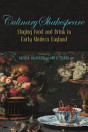
The sourcebook offers new insights into the early modern experience of sustenance. It introduces readers to the tribulations of the women who started a 1629 grain riot, reveals the primacy of eating in Thomas More's Utopia, and explains the significance of posset pots and wedding cutlery. The volume features familiar voices such as Spenser, Shakespeare, Jonson, and Milton alongside lesser-known texts and objects to illuminate broader questions of gender, body, hospitality, religion, medicine, social status, ecology, and empire. Drawing from an expansive range of sources—including recipe books, travel narratives, philosophical treatises, and agricultural handbooks—these entries, many previously unpublished, have been expertly curated by leading scholars to map food's journey through early modern English culture.
With modern spelling adaptations, contextual headnotes, and comprehensive glossaries of culinary terms, this sourcebook is an accessible and engaging entry point into the field of early modern food studies, ready to use in and beyond the classroom. Its interdisciplinary focus makes this resource of value to students and scholars interested not only in food history but also in cultural studies, art history, and literature.
Discover more
About the author
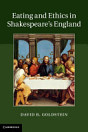
David B. Goldstein serves as Professor of English and Creative Writing at York University in Toronto. His first monograph, Eating and Ethics in Shakespeare’s England, shared the Shakespeare’s Globe Book Award in 2013. A former restaurant critic and food magazine editor, he has also published three co-edited essay collections on topics related to Shakespeare, food, and early modern hospitality; two books of poetry; and a range of essays on literature, food studies, Emmanuel Levinas, ecology, and contemporary poetics. For four years he co-directed the Folger Shakespeare Library’s Mellon-funded research collaboration, Before “Farm to Table”: Early Modern Foodways and Cultures.
Victoria Yeoman is Professor of English and Liberal Studies at Seneca Polytechnic in Toronto. She has published on early modern foodways, drama, religion, identity, material culture, and pedagogy in the journals Renaissance Studies, Discourse and Writing, and West 86th: The Journal of Decorative Art, Design History, and Material Culture, and in the edited collections Shakespeare and the Stuff of Life (2016) and Routledge Encyclopedia of the Renaissance World (2024). She held the Rhinehart Postdoctoral Fellowship in British History at Appalachian State University (2016–2018) and was a residential fellow (2019–2020) at the Linda Hall Library.