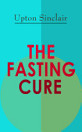
The Fasting Cure
Nov 2022 · DigiCat
Ebook
87
Pages
family_home
Eligible
info
About this ebook
In "The Fasting Cure," Upton Sinclair explores the multifaceted dimensions of fasting, interweaving personal anecdotes with scientific discourse to address the benefits of fasting as a holistic practice for health and rejuvenation. Sinclair employs a conversational yet persuasive literary style, aiming to provoke thought regarding dietary habits in the early 20th century—an era marked by industrialization and increasing consumerism. The book stands as both a guide and a critical commentary on contemporary medical practices, encouraging readers to reconsider their relationship with food and health while offering practical advice grounded in Sinclair's own experiences with fasting. Upton Sinclair, a prominent American novelist and reformer, is widely known for his investigative work and social critiques, most notably "The Jungle." His fascination with nutrition and health reform stemmed from his broader commitment to social justice, revealing the intersections between personal health, industrialized food systems, and consumer health ethics. Sinclair's encounters with chronic illness and his quest for remedies led him to discover the practices he describes in this work, making it a deeply personal exploration of his values and beliefs about well-being. "The Fasting Cure" is highly recommended for readers interested in the nexus of health, food, and social critique. Sinclair's insights not only challenge conventional dietary paradigms but also stimulate vital discussions about individual agency in health. Whether you are a health enthusiast or a casual reader, Sinclair's blend of narrative and advocacy makes this book a thought-provoking read that encourages deeper reflection on the food choices we make.
In "The Fasting Cure," Upton Sinclair explores the multifaceted dimensions of fasting, interweaving personal anecdotes with scientific discourse to address the benefits of fasting as a holistic practice for health and rejuvenation. Sinclair employs a conversational yet persuasive literary style, ...
Discover more
About the author
Upton Sinclair was a prolific American author and political activist born on September 20, 1878, in Baltimore, Maryland. With a career that spanned several decades, Sinclair is perhaps best known for his muckraking novel 'The Jungle' (1906), which exposed the harsh conditions and unsanitary practices in the American meatpacking industry, leading to public outcry and the eventual passage of federal legislation to improve food safety. Sinclair was a dedicated advocate for social reform, and his work often reflected his commitment to exposing social injustice and advocating for socialist causes. His writing style was characterized by its directness and intent to bring to light the struggles of the working class. Another notable work, 'The Fasting Cure' (1911), reflects Sinclair's interest in health and well-being, as he delved into the purported benefits of fasting as a therapeutic practice. Though less politically charged than many of his other works, 'The Fasting Cure' nonetheless exemplifies his willingness to explore and disseminate unconventional ideas. A member of the American Socialist Party, Sinclair ran unsuccessfully for Congress as a Socialist, and later for Governor of California as a Democrat. His dedication to both literature and politics earned him the Pulitzer Prize for Fiction in 1943 for 'Dragon's Teeth,' a book that forms part of his 'World's End' series dealing with the rise of Nazism. Sinclair's legacy is one of passionate advocacy and unwavering pursuit of social progress through his extensive and diverse body of work. He passed away on November 25, 1968, in Bound Brook, New Jersey, but his influence on American literature and social activism endures.
Upton Sinclair was a prolific American author and political activist born on September 20, 1878, in Baltimore, Maryland. With a career that spanned several decades, Sinclair is perhaps best known for his muckraking novel 'The Jungle' (1906), which exposed the harsh conditions and unsanitary pract...
Rate this ebook
Tell us what you think.
Reading information
Smartphones and tablets
Install the Google Play Books app for Android and iPad/iPhone. It syncs automatically with your account and allows you to read online or offline wherever you are.
Laptops and computers
You can listen to audiobooks purchased on Google Play using your computer's web browser.
eReaders and other devices
To read on e-ink devices like Kobo eReaders, you'll need to download a file and transfer it to your device. Follow the detailed Help Center instructions to transfer the files to supported eReaders.