About this ebook
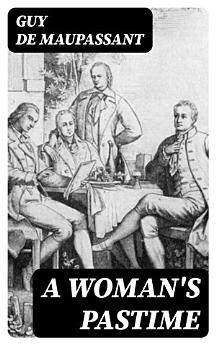
In "A Woman's Pastime," Guy de Maupassant masterfully navigates the complexities of human emotions through a poignant narrative that captures the trials of love and desire. Set against the backdrop of late 19th-century France, the novella adheres to Maupassant's hallmark realist style, interwoven with rich character studies that delve into societal expectations and personal aspirations. The text operates within the literary context of naturalism, showcasing the struggles of women within a patriarchal society, while also addressing themes of existential angst and moral ambiguity, typical of Maupassant's oeuvre. Guy de Maupassant, a contemporary of Flaubert and Zola, was greatly influenced by the tumultuous changes in post-revolutionary French society. His own experiences with love, loss, and the complexities of relationships often permeate his work. Known for his observation of the human condition, Maupassant's acute understanding of psychological intricacies in "A Woman's Pastime" can be traced to his tumultuous personal life, including relations with women and his eventual decline into despair. This compelling novella is a must-read for anyone interested in the exploration of gender roles and the nature of desire. Maupassant's nuanced portrayal of his characters invites readers to reflect on their own judgements and the societal pressures that shape personal decisions. The work remains a timeless examination of the intersection between societal constraints and individual freedom, ensuring its relevance in contemporary discourse.
In "A Woman's Pastime," Guy de Maupassant masterfully navigates the complexities of human emotions through a poignant narrative that captures the trials of love and desire. Set against the backdrop of late 19th-century France, the novella adheres to Maupassant's hallmark realist style, interwoven...
Discover more
About the author
Guy de Maupassant, born Henri René Albert Guy de Maupassant on August 5, 1850, in Normandy, France, developed a reputation as one of the foremost French writers of the 19th century. With a proclivity for short stories, Maupassant excelled in creating narratives that delved into the complexities of human nature and the ironies of life, often underscored by a sense of realism and psychological depth. He was adept at both the 'conte', a very short story, and the longer 'nouvelle', or novella, in which 'A Woman's Pastime' ('Une Vie')—originally published as 'L'Humble Vérité'—would be categorized. This novel, his first, is widely regarded as a semi-autobiographical work, offering insights into the lives and struggles of women during the 19th century. Through masterful prose and character studies, Maupassant constructs narratives that are marked by their sophisticated simplicity and impactful irony. A protégé of Gustave Flaubert, Maupassant's writing is often compared to his mentor's for its precision and style, as well as its critique of society. He is also known for works such as 'Bel-Ami', 'The Necklace', and 'Pierre and Jean' which further cement his legacy as a preeminent short story writer and novelist. Unfortunately, his life came to a premature end when he died on July 6, 1893, after struggling with mental illness. Despite living only to the age of 42, his productivity was immense, leaving behind over 300 short stories, six novels, and numerous other writings that continue to be studied and admired for their insight into the human condition.
Guy de Maupassant, born Henri René Albert Guy de Maupassant on August 5, 1850, in Normandy, France, developed a reputation as one of the foremost French writers of the 19th century. With a proclivity for short stories, Maupassant excelled in creating narratives that delved into the complexities o...
Rate this ebook
Tell us what you think.
Reading information
Smartphones and tablets
Install the Google Play Books app for Android and iPad/iPhone. It syncs automatically with your account and allows you to read online or offline wherever you are.
Laptops and computers
You can listen to audiobooks purchased on Google Play using your computer's web browser.
eReaders and other devices
To read on e-ink devices like Kobo eReaders, you'll need to download a file and transfer it to your device. Follow the detailed Help Center instructions to transfer the files to supported eReaders.