About this ebook
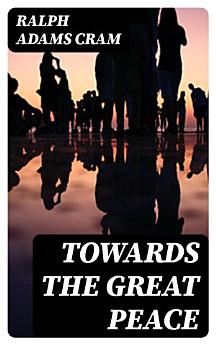
Ralph Adams Cram's 'Towards the Great Peace' is an introspective journey into the sociopolitical underpinnings of the catastrophic events that culminated in the Great War. Deploying his mastery in architecture as a metaphorical lens, Cram deconstructs the edifice of pre-war society to expose its structural flaws. Couched in a style that mirrors the analytical precision of a designer, he brings forth a cross-examination of the era's religion, philosophy, industry, and education. His critique is a compendium that not only dissects the failures but also outlines a blueprint for societal reformation that could ideally usher in an epoch of harmony, standing as a stark antithesis to the chaos of war.nRalph Adams Cram's multifaceted persona as an architect, writer, and social critic reifies into the insightful perspectives he espouses in this work. His architectural expertise provides a unique backdrop that informed his analysis, with the belief that structural reform in societal pillars could prevent future conflicts. Cram's scrutiny reflects his own historical context as well as a profound reaction against the turmoil he witnessed, shaping his aspirational quest for a pacifistic resolution in human endeavors.n'Towards the Great Peace' is recommendable not merely as historical discourse but as a visionary glimpse into what could be if society were to recalibrate its foundational ideologies. Readers interested in World War I's intricate backstory, the intersection of social structures, and the pursuit of peace will find Cram's work a compelling narrative. The book beckons those who are scholars of history and peace studies, as well as architects of a better world, to consider the multidimensional approach necessary for achieving a truly 'Great Peace.'
Ralph Adams Cram's 'Towards the Great Peace' is an introspective journey into the sociopolitical underpinnings of the catastrophic events that culminated in the Great War. Deploying his mastery in architecture as a metaphorical lens, Cram deconstructs the edifice of pre-war society to expose its ...
Discover more
About the author
Ralph Adams Cram (1863–1942) was a highly influential American architect, writer, and advocate for the Gothic Revival style in architecture. As an erudite scholar, Cram's foray into literature and philosophy complements his architectural contributions, showcasing his interdisciplinary prowess. His treatise 'Towards the Great Peace' (1922) examines the tumultuous post-World War I era and advocates for a cohesive cultural and spiritual renaissance anchored in Christian principles and medieval unity. This work, reflective of his broader Weltanschauung, melds his aesthetic sensibilities with a critique of modernity and a yearning for harmonious societal structures. Cram's literary style in 'Towards the Great Peace' is marked by a commanding but contemplative prose, brimming with historical allusions and a pervasive sense of urgency toward cultural revitalization. As an architect, Cram's legacy includes the design of significant ecclesiastical buildings, such as the Cathedral of St. John the Divine in New York and the Princeton University Chapel. His written and built works alike resonate with his belief in the transformative power of beauty and his commitment to a revival of craft and traditional values in the face of industrialization and rapid social change. Cram's intellectual contributions, deeply rooted in his architectural philosophy, continue to offer insights into the interplay between cultural identity, aesthetics, and spirituality.
Ralph Adams Cram (1863–1942) was a highly influential American architect, writer, and advocate for the Gothic Revival style in architecture. As an erudite scholar, Cram's foray into literature and philosophy complements his architectural contributions, showcasing his interdisciplinary prowess. Hi...
Rate this ebook
Tell us what you think.
Reading information
Smartphones and tablets
Install the Google Play Books app for Android and iPad/iPhone. It syncs automatically with your account and allows you to read online or offline wherever you are.
Laptops and computers
You can listen to audiobooks purchased on Google Play using your computer's web browser.
eReaders and other devices
To read on e-ink devices like Kobo eReaders, you'll need to download a file and transfer it to your device. Follow the detailed Help Center instructions to transfer the files to supported eReaders.