About this ebook
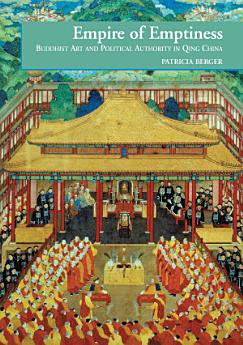
Imperial Manchu support and patronage of Buddhism, particularly in Mongolia and Tibet, has often been dismissed as cynical political manipulation. Empire of Emptiness questions this generalization by taking a fresh look at the huge outpouring of Buddhist painting, sculpture, and decorative arts Qing court artists produced for distribution throughout the empire. It examines some of the Buddhist underpinnings of the Qing view of rulership and shows just how central images were in the carefully reasoned rhetoric the court directed toward its Buddhist allies in inner Asia.
The multilingual, culturally fluid Qing emperors put an extraordinary range of visual styles into practice--Chinese, Tibetan, Nepalese, and even the European Baroque brought to the court by Jesuit artists. Their pictorial, sculptural, and architectural projects escape easy analysis and raise questions about the difference between verbal and pictorial description, the ways in which overt and covert meaning could be embedded in images through juxtaposition and collage, and the collection and criticism of paintings and calligraphy that were intended as supports for practice and not initially as works of art.
The multilingual, culturally fluid Qing emperors put an extraordinary range of visual styles into practice--Chinese, Tibetan, Nepalese, and even the European Baroque brought to the court by Jesuit artists. Their pictorial, sculptural, and architectural projects escape easy analysis and raise questions about the difference between verbal and pictorial description, the ways in which overt and covert meaning could be embedded in images through juxtaposition and collage, and the collection and criticism of paintings and calligraphy that were intended as supports for practice and not initially as works of art.
Imperial Manchu support and patronage of Buddhism, particularly in Mongolia and Tibet, has often been dismissed as cynical political manipulation. Empire of Emptiness questions this generalization by taking a fresh look at the huge outpouring of Buddhist painting, sculpture, and decorative arts Q...
Discover more
Rate this ebook
Tell us what you think.
Reading information
Smartphones and tablets
Install the Google Play Books app for Android and iPad/iPhone. It syncs automatically with your account and allows you to read online or offline wherever you are.
Laptops and computers
You can listen to audiobooks purchased on Google Play using your computer's web browser.
eReaders and other devices
To read on e-ink devices like Kobo eReaders, you'll need to download a file and transfer it to your device. Follow the detailed Help Center instructions to transfer the files to supported eReaders.