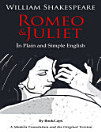
ROMEO AND JULIET - William Shakespeare: Shakespeare's classic, now in modern English
About this ebook
Discover more
Ratings and reviews
About the author
William Shakespeare (1564–1616) is widely recognized as the most influential playwright and poet in the history of English literature and one of the central figures of Western culture. Born in Stratford-upon-Avon, Shakespeare developed his career in the vibrant Elizabethan and Jacobean London, where he was an actor, playwright, and co-owner of the theater company Lord Chamberlain’s Men (later known as the King’s Men).
His vast body of work, which comprises approximately 38 plays, 154 sonnets, and several narrative poems, stands out for its unparalleled ability to capture the depth of the human experience. Through his tragedies, comedies, and history plays, Shakespeare explored universal themes such as power, ambition, love, betrayal, and the nature of destiny, elevating dramatic language to levels of lyrical and psychological complexity that have not been surpassed.
More than four centuries after his death, the relevance of his legacy persists. His characters continue to be archetypes of our own condition, and his stories are still being performed and adapted all over the world, confirming that Shakespeare's genius lies in his ability to speak to every generation with a timeless clarity.
Llorenç Macip is a writer, translator, and editor dedicated to the preservation and dissemination of world literature through accessible critical editions. His work focuses on building bridges between the complexity of classical texts and the contemporary reader, through a meticulous adaptation process that preserves the structural integrity and emotional resonance of the original work.
Specializing in comparative linguistics and the study of minority languages and dialectal variants, Macip combines academic rigor with an innovative editorial vision. His work is not limited to translation, but includes the creation of a critical apparatus that allows the modern reader to understand the historical, philosophical, and cultural context of humanity's great works.
With a focus oriented toward technical excellence and efficiency in knowledge management, his editorial catalog stands as a testament to the enduring power of the classics as mirrors of the human condition. Through his various adaptations, Macip seeks to restore the clarity and urgency necessary for the great dramas and stories of history to speak once again with a renewed voice to new generations.