About this ebook
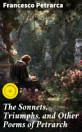
In 'Petrarch's Letters to Classical Authors', Francesco Petrarca offers an unprecedented literary experience where the epistolary genre is utilized to bridge the temporal divide between the Renaissance and Antiquity. These letters, composed with eloquence and scholarly flair, are addressed to antiquity's most venerated figures, such as Cicero and Livy, and are characterized by Petrarca's astute interweaving of personal sentiment with humanistic reverence. Each missive serves as both homage and discourse, as Petrarca contemplates and critiques the works of the masters through the lens of his own epoch, thus contextualizing the relevance of classical wisdom in the evolving landscape of humanist thought and literature. The work stands as a testament to the author's profound engagement with the classical tradition, and his style is a reflection of the erudite versatility that has come to define Renaissance humanism. Francesco Petrarca, known in English as Petrarch, is often considered the father of Humanism, his works forming the ideological bedrock upon which the Renaissance was built. His passion for the past coupled with a visionary perspective marked the awakening from medieval scholasticism to a new era of literature and thought. It is this unique intersection of classical scholarship and burgeoning humanist ideals that likely compelled Petrarch to converse through time with the intellectual giants of the distant past. Reveling in his own literary achievements, while deeply influenced by the philosophical and poetic genius of antiquity, Petrarch's writings embody the transition from medieval obscurity to the light of intellectual inquiry and appreciation for the classics. 'Petrarch's Letters to Classical Authors' is thus essential reading for scholars and enthusiasts of literature and history alike. The reader is invited to participate in a contemplative journey with Petrarch as he navigates the complexities of human experience through the dialogue with his illustrious predecessors. This edition, thoughtfully reproduced by DigiCat Publishing, provides an opportunity for modern audiences to immerse themselves in the timeless exchange of wisdom and to appreciate the lasting legacy of Petrarch's humanistic exploration.
In 'Petrarch's Letters to Classical Authors', Francesco Petrarca offers an unprecedented literary experience where the epistolary genre is utilized to bridge the temporal divide between the Renaissance and Antiquity. These letters, composed with eloquence and scholarly flair, are addressed to ant...
Discover more
About the author
Francesco Petrarca, commonly anglicized as Petrarch (1304–1374), was an Italian scholar, poet, and one of the earliest humanists. His rediscovery of Cicero's letters is often credited with initiating the 14th-century Renaissance and the founding of Renaissance humanism. He is best known for his Italian poetry, notably the Canzoniere ('Songbook') and the Trionfi ('Triumphs'). However, Petrarch was also a devoted classical scholar and composed a significant body of Latin works. Among his most notable contributions to literature is his 'Petrarch's Letters to Classical Authors' which consists of a series of letters addressed to ancient writers such as Cicero, Virgil, and Horace. In these letters, Petrarch crafted an intimate dialogue with the ancients, exercising his belief in the timeless wisdom of classical antiquity. His writings exhibit eloquent classical Latin and an emphasis on personal emotion; his work helped to establish the sonnet form in Italian poetry and deeply influenced later poets such as Shakespeare. Petrarch's humanist philosophy and poetic sensibility have had a lasting impact on Western literature, conveying a blend of heartfelt introspection and intellectual rigour. His legacy remains integral to the canon of both Italian and European literature.
Francesco Petrarca, commonly anglicized as Petrarch (1304–1374), was an Italian scholar, poet, and one of the earliest humanists. His rediscovery of Cicero's letters is often credited with initiating the 14th-century Renaissance and the founding of Renaissance humanism. He is best known for his I...
Rate this ebook
Tell us what you think.
Reading information
Smartphones and tablets
Install the Google Play Books app for Android and iPad/iPhone. It syncs automatically with your account and allows you to read online or offline wherever you are.
Laptops and computers
You can listen to audiobooks purchased on Google Play using your computer's web browser.
eReaders and other devices
To read on e-ink devices like Kobo eReaders, you'll need to download a file and transfer it to your device. Follow the detailed Help Center instructions to transfer the files to supported eReaders.