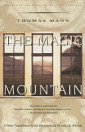
The Magic Mountain (Summarized Edition): Enriched edition. Swiss Alps sanatorium life: tuberculosis, pre-war Europe, and an intellectual awakening amid cultural and philosophical clashes
Jan 2026 · Quickie Classics
Ebook
271
Pages
family_home
Eligible
info
About this ebook
Set in a Swiss sanatorium above Davos, The Magic Mountain follows Hans Castorp, a complacent young engineer whose brief visit to his cousin expands into a seven-year initiation in illness, time, and ideology. Mann fuses Bildungsroman and novel of ideas: Settembrini and Naphta argue humanism versus absolutism, while Clavdia Chauchat and Peeperkorn complicate desire and authority, all under an ironic, modernist, time-dilating narration on the eve of war. Mann conceived the project after accompanying his wife, Katia, to Davos, then rewrote it in the aftermath of World War I, turning a convalescent sketch into a diagnosis of Europe. The 1929 Nobel laureate channels Nietzschean and Schopenhauerian tensions, bourgeois irony, and early anti-authoritarian commitments formed during his break with nationalist politics. Recommended for readers of Proust and Musil, for students of medical humanities and intellectual history, and for anyone curious how a private sojourn becomes a continent's parable. The Magic Mountain rewards patient reading with capacious wit, philosophical clarity, and a haunting premonition of the twentieth century's storms. Quickie Classics summarizes timeless works with precision, preserving the author's voice and keeping the prose clear, fast, and readable—distilled, never diluted. Enriched Edition extras: Introduction · Synopsis · Historical Context · Author Biography · Brief Analysis · 4 Reflection Q&As · Editorial Footnotes.
Set in a Swiss sanatorium above Davos, The Magic Mountain follows Hans Castorp, a complacent young engineer whose brief visit to his cousin expands into a seven-year initiation in illness, time, and ideology. Mann fuses Bildungsroman and novel of ideas: Settembrini and Naphta argue humanism versu...
Discover more
About the author
Thomas Mann (1875-1955) was a German novelist, short story writer, social critic, philanthropist, essayist, and the 1929 Nobel Prize in Literature laureate. His highly symbolic and ironic epic novels and novellas are noted for their insight into the psychology of the artist and the intellectual. His analysis and critique of the European and German soul used modernized versions of German and Biblical stories, as well as the ideas of Johann Wolfgang von Goethe, Friedrich Nietzsche and Arthur Schopenhauer.
Thomas Mann (1875-1955) was a German novelist, short story writer, social critic, philanthropist, essayist, and the 1929 Nobel Prize in Literature laureate. His highly symbolic and ironic epic novels and novellas are noted for their insight into the psychology of the artist and the intellectual. ...
Rate this ebook
Tell us what you think.
Reading information
Smartphones and tablets
Install the Google Play Books app for Android and iPad/iPhone. It syncs automatically with your account and allows you to read online or offline wherever you are.
Laptops and computers
You can listen to audiobooks purchased on Google Play using your computer's web browser.
eReaders and other devices
To read on e-ink devices like Kobo eReaders, you'll need to download a file and transfer it to your device. Follow the detailed Help Center instructions to transfer the files to supported eReaders.