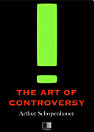
The Art of being right - Schopenhauer
About this ebook
Though brief, the work remains strikingly relevant in today's world of political discourse, social media, and public debate. Schopenhauer's tone is deliberately cynical, highlighting the gap between logical argumentation and human behavior. By cataloguing these 38 methods, he offers not only a manual for recognizing fallacious tactics but also a commentary on the nature of ego and intellectual dishonesty.
The enduring appeal of The Art of Being Right lies in its dual function: it serves both as a satirical guide to debate and as a philosophical reflection on human competitiveness and the value we place on being right—often more than being truthful.
Ratings and reviews

- Flag inappropriate
About the author
Arthur Schopenhauer was a German philosopher best known for his work The World as Will and Representation, and for his profound pessimism and influence on later existentialist and psychological thought. Born in Danzig (now Gdańsk, Poland), Schopenhauer developed a metaphysical theory that placed the irrational "will" at the core of existence, offering a counterpoint to the rationalist optimism of his contemporaries. Though largely unrecognized during much of his lifetime, his writings gained significant attention later in the 19th century, influencing figures such as Friedrich Nietzsche, Sigmund Freud, and Thomas Mann.
Schopenhauer's magnum opus, The World as Will and Representation (1818), argues that reality is driven not by reason or divine order, but by an irrational and insatiable will. He posited that human suffering stems from this will, which compels individuals toward endless striving and dissatisfaction. Aesthetic contemplation, ascetic living, and compassion were, for him, the few ways to momentarily escape suffering
Schopenhauer is now regarded as one of the most significant 19th-century philosophers. His ideas anticipated key themes in existentialism, psychoanalysis, and nihilism. Friedrich Nietzsche initially admired him, and Sigmund Freud's theory of the unconscious bears traces of Schopenhauer's concept of the will. In literature, his pessimism and metaphysical insights influenced figures such as Leo Tolstoy, Marcel Proust, and Thomas Mann.
His work also bridged Western and Eastern thought, introducing European readers to ideas from the Upanishads and Buddhist texts. His vision of a world driven by blind desire and suffering resonated with modern disillusionment, making him a prophet of the existential crises that would define much of 20th-century philosophy and art.