About this ebook
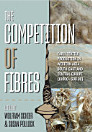
Contributions investigate the beginnings of wool use in western Asia and southeastern Europe. The importance of wool in considerations of early textiles is due to at least two factors. First, both wild as well as some domesticated sheep are characterized by a hairy rather than a woolly coat. This raises the question of when and where woolly sheep emerged, a question that has not up to now been resolvable by genetic or other biological analyses. Second, wool as a fiber has played a major role both economically and socially in both western Asian and European societies from as early as the 3rd millennium BCE in Mesopotamia, and it continues to do so, in different ways, up to the modern day. Despite the importance of wool as a fiber resource contributors demonstrate clearly that its development and use can only be properly addressed in the context of a consideration of other fibers, both plant and animal. Only within a framework that takes into account historically and regionally variable strategies of procurement, processing, and the products of different types of fibers is it possible to gain real insights into the changing roles played by fibers and textiles in the lives of people in different places and times in the past.
With relatively rare, albeit sometimes spectacular exceptions, archaeological contexts offer only poor conditions of preservation for textiles. As a result, archaeologists are dependent on indirect or proxy indicators such as textile tools (e.g., loom weights, spindle whorls) and the analysis of faunal remains to explore a range of such proxies and methods by which they may be analyzed and evaluated in order to contribute to an understanding of fiber and textile production and use in the past.
Discover more
About the author
Dr. Wolfram Schier is a Professor of Prehistoric Archaeology at Freie Universitat Berlin
Susan Pollock is currently professor at the Institut für Vorderasiatische Archäologie at the Freie Universität Berlin. She previously held a position as Professor in the Department of Anthropology, Binghamton University, Binghamton, NY. She has longstanding research interests in the village and early state societies of Western Asia and has conducted field projects in Iran, Iraq, and Turkey as well as Turkmenistan.Her recent work has involved much more recent periods, with field projects on sites of the 20th century in and around Berlin. She researches processes of subjectivation, commensality and food-related practices, political economy, and feminist approaches to the past.She is the author of Ancient Mesopotamia: The Eden that Never Was, editor of Between Feasts and Daily Meals. Toward an Archaeology of Commensal Spaces, and co-editor (with Reinhard Bernbeck and Kamyar Abdi) of The 2003 Excavations at Tol-e Baši, Iran: Social Life in a Neolithic Village.