About this ebook
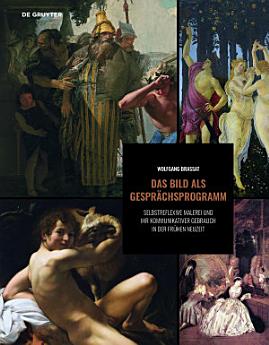
The present publication deals with the communicative use of painting during the early modern period. In contrast to modernism, the early modern period was characterized by the ideal of a sociable, playful reception of art, in which works were translated and commented on in and through conversational rhetorical language. With a view to progressive processes of art becoming autonomous, Wolfgang Brassat uses selected examples from the quattrocento to French and English art of the 18th century to investigate how artists stimulated conversation about their work and the arts through recursive and selfreflexive procedures, enigmatic and ambiguous pictorial elements, the thwarting of established representational conventions, and the questioning of the traditional concept of art.
The present publication deals with the communicative use of painting during the early modern period. In contrast to modernism, the early modern period was characterized by the ideal of a sociable, playful reception of art, in which works were translated and commented on in and through conversatio...
Discover more
About the author
Wolfgang Brassat, Otto-Friedrich-Universität, Bamberg
Wolfgang Brassat, Otto-Friedrich-Universität, Bamberg
Rate this ebook
Tell us what you think.
Reading information
Smartphones and tablets
Install the Google Play Books app for Android and iPad/iPhone. It syncs automatically with your account and allows you to read online or offline wherever you are.
Laptops and computers
You can listen to audiobooks purchased on Google Play using your computer's web browser.
eReaders and other devices
To read on e-ink devices like Kobo eReaders, you'll need to download a file and transfer it to your device. Follow the detailed Help Center instructions to transfer the files to supported eReaders.