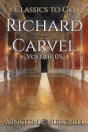
Richard Carvel: Restored Classics to Go Edition
About this ebook
Discover more
About the author
Winston Churchill was an American novelist and public thinker born in 1871 in St. Louis, Missouri, who came of age during a period of rapid industrial change, imperial ambition, and rising public debate about democracy and reform. Educated at the United States Naval Academy and briefly drawn toward military life, he instead built his reputation through fiction and commentary, becoming one of the most widely read writers of his era. His novels made him a literary celebrity in the early twentieth century, while his later essays and public writings showed a mind deeply engaged with questions of ethics, politics, and national identity. Although he is often remembered today less than some of his contemporaries, his work helped shape popular historical fiction and reflected a serious concern with how private conscience meets public duty. Across his career, Churchill returned to themes of ambition, social change, moral responsibility, and the making of character under pressure, concerns that still resonate in a world grappling with civic trust, inequality, and the tension between personal desire and collective obligation. His legacy lies in his ability to combine storytelling with social observation, offering readers both entertainment and a window into the values and anxieties of his age. Readers who enjoy sweeping historical narratives, early American fiction, and novels that mix adventure with moral reflection are especially likely to appreciate him.