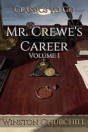
Mr. Crewe's Career: Restored Classics to Go Edition
About this ebook
Discover more
About the author
Winston Churchill, the American novelist and politician not to be confused with his more famous British namesake, was born in St. Louis, Missouri, in 1871 and came of age during a period when the United States was rapidly modernizing and redefining itself. Educated at the United States Naval Academy and later drawn into literary and public life, he achieved early fame as one of the most popular novelists of his day, writing ambitious, socially observant fiction that captured the politics, ambitions, and moral tensions of American life. His career as a writer was marked by a gift for combining entertainment with serious reflection, and his novels often explored the pressures of success, the corruption of power, the fragility of idealism, and the uneasy relationship between private conscience and public responsibility. These concerns still feel timely, especially in an age when readers continue to wrestle with political polarization, social ambition, and the question of how individuals remain principled inside competitive systems. Churchill's work also reflects a keen interest in the texture of ordinary life and the ways personal choices shape larger public outcomes, giving his fiction a distinctly civic dimension. Though his reputation has faded compared with some of his contemporaries, he remains significant as a writer who helped popularize the serious American novel for a broad audience and who understood that politics and character are inseparable. Readers who enjoy historical fiction, social realism, and novels of ideas will find much to admire in his work, especially if they appreciate stories that are both readable and morally alert.