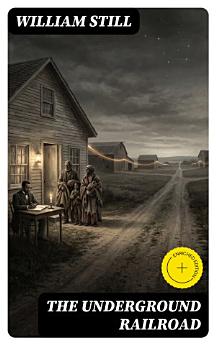
The Underground Railroad (Annotated): Enriched Edition. Fugitive Slave Narratives, Abolitionist Testimonies, and the Struggle for Freedom in Nineteenth-Century America
William Still
Nov 2022 · DigiCat
Ebook
1264
Pages
family_home
Eligible
info
About this ebook
William Still's The Underground Railroad (1872) is a landmark documentary history of the clandestine network that aided enslaved people seeking freedom in the antebellum United States. Combining narrative biography, autobiographical testimony, correspondence, organizational records, and abolitionist commentary, Still reconstructs the journeys of fugitives and the assistance offered by Black and white agents. Its episodic structure and vivid personal accounts give the work both archival authority and the dramatic force of life writing, while its moral clarity places it within nineteenth-century abolitionist literature and the emerging tradition of African American historiography. The book is not merely an account of escape; it is a sustained record of courage, strategy, community, and resistance to slavery's legal and social order. Still, a free-born Black Philadelphian, abolitionist, businessman, and secretary of the Philadelphia Vigilance Committee, occupied a uniquely informed position. He interviewed freedom seekers, preserved their narratives, coordinated assistance, and maintained crucial records at considerable personal risk. His work arose from a conviction that Black agency and Black testimony had to be documented against the distortions of proslavery politics and the silences of conventional history. The volume therefore reflects both direct experience and a deliberate effort to preserve collective memory. This book is essential for readers interested in slavery, abolitionism, African American history, and documentary literature. Scholars will value its evidentiary richness, while general readers will find its testimonies immediate and compelling. Still's volume remains indispensable for understanding freedom-making as an organized, interracial, and profoundly human struggle. This enriched edition has been carefully crafted to add value to your reading experience. - A succinct Introduction situates the work's timeless appeal and themes. - The Synopsis outlines the central plot, highlighting key developments without spoiling critical twists. - A detailed Historical Context immerses you in the era's events and influences that shaped the writing. - A thorough Analysis dissects symbols, motifs, and character arcs to unearth underlying meanings. - Reflection questions prompt you to engage personally with the work's messages, connecting them to modern life.
William Still's The Underground Railroad (1872) is a landmark documentary history of the clandestine network that aided enslaved people seeking freedom in the antebellum United States. Combining narrative biography, autobiographical testimony, correspondence, organizational records, and abolition...
Discover more
About the author
William Still (1821–1902) was a prominent African American abolitionist, conductor on the Underground Railroad, writer, historian, and civil rights activist. Born in New Jersey, Still grew up in a family that had endured the harsh realities of slavery; his own parents had escaped from bondage. His seminal work, 'The Underground Railroad', published in 1872, provides a detailed account of the clandestine network that helped enslaved Africans escape to freedom. This work is not only a collection of stories and real-life experiences but also serves as an invaluable historical document that highlights the bravery of the freedom seekers and those who aided them, including Still himself. An exemplar of the literary form categorized as historical texts or slave narratives, Still's writing combines factual recounting with a compelling narrative style that brings to life the struggles and triumphs of the historical figures he describes. 'The Underground Railroad' remains an essential source for understanding the complexities of American slavery, resistance, and the fight for freedom. In addition to his literary contributions, Still's efforts as a civil rights advocate and philanthropist are noteworthy, having held leadership positions in organizations like the Pennsylvania Society for the Abolition of Slavery. His biography reflects the quintessential story of the relentless fight against oppression and his enduring legacy as a champion of justice and equality.
William Still (1821–1902) was a prominent African American abolitionist, conductor on the Underground Railroad, writer, historian, and civil rights activist. Born in New Jersey, Still grew up in a family that had endured the harsh realities of slavery; his own parents had escaped from bondage. Hi...
Rate this ebook
Tell us what you think.
Reading information
Smartphones and tablets
Install the Google Play Books app for Android and iPad/iPhone. It syncs automatically with your account and allows you to read online or offline wherever you are.
Laptops and computers
You can listen to audiobooks purchased on Google Play using your computer's web browser.
eReaders and other devices
To read on e-ink devices like Kobo eReaders, you'll need to download a file and transfer it to your device. Follow the detailed Help Center instructions to transfer the files to supported eReaders.