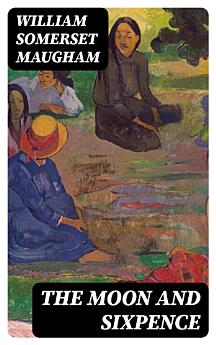
The Moon and Sixpence
Nov 2022 · DigiCat
Ebook
239
Pages
family_home
Eligible
info
About this ebook
In "The Moon and Sixpence," William Somerset Maugham weaves a captivating narrative inspired by the life of the artist Paul Gauguin. This novel employs a rich, impressionistic style that mirrors the vividness of Gauguin's own works, inviting the reader into a world where the boundaries between reality and art blur. Maugham's exploration of the conflict between societal expectations and creative ambition is intricately developed through the protagonist, Charles Strickland, whose obsessive pursuit of artistic expression leads him to abandon his mundane life in London for the enchanting yet challenging landscapes of Tahiti. The novel not only serves as a profound character study but also critiques the very essence of civilization in contrast to the primal instincts of desire and creativity. Maugham's own travels and experiences as an expatriate deeply influenced his depiction of artistic fervor and the inherent struggle for self-realization. His background as a playwright and novelist, coupled with his encounters with artists and bohemians, provides a nuanced understanding of the fine line between genius and madness. This rich tapestry of personal insight and observation is expertly woven into the fabric of the narrative, making it a compelling read. "The Moon and Sixpence" is a must-read for anyone interested in the intricate interplay between art and life, as well as those who ponder the sacrifices made in the pursuit of passion. Maugham eloquently captures the complexity of human nature, making this novel a timeless exploration of the price of artistic integrity and the relentless quest for authenticity.
In "The Moon and Sixpence," William Somerset Maugham weaves a captivating narrative inspired by the life of the artist Paul Gauguin. This novel employs a rich, impressionistic style that mirrors the vividness of Gauguin's own works, inviting the reader into a world where the boundaries between re...
Discover more
About the author
William Somerset Maugham, born on January 25, 1874, in Paris and deceased on December 16, 1965, was an English playwright, novelist, and short story writer, whose work is characterized by a clear, unadorned narrative style and a shrewd insight into human motivations. After losing both his parents at an early age, Maugham was raised by an uncle and educated at King's School, Canterbury, and Heidelberg University. He initially trained as a doctor at St. Thomas's Hospital in London, a background that informed his first novel, 'Liza of Lambeth' (1897), which drew on his experiences with the working class in London's slums. Maugham's breakthrough as a playwright came with 'Lady Frederick' in 1907, and he soon became one of the most popular dramatists of his day. However, it is his novels and short stories that have secured his literary reputation. In 'The Moon and Sixpence' (1919), Maugham delves into the complexities of artistic obsession, loosely basing his character Charles Strickland on the life of the painter Paul Gauguin. This book exemplifies Maugham's talent for coupling a penetrating observation of the human condition with the captivating allure of his discerning prose. Other notable works include 'Of Human Bondage' (1915), which is regarded as his masterpiece, and 'The Razor's Edge' (1944), exploring themes of spiritual seeking and social upheaval. Known for his wit and the worldly, cynical characters that frequent his stories, Maugham's work remains a cornerstone of early 20th-century literary canon.
William Somerset Maugham, born on January 25, 1874, in Paris and deceased on December 16, 1965, was an English playwright, novelist, and short story writer, whose work is characterized by a clear, unadorned narrative style and a shrewd insight into human motivations. After losing both his parents...
Rate this ebook
Tell us what you think.
Reading information
Smartphones and tablets
Install the Google Play Books app for Android and iPad/iPhone. It syncs automatically with your account and allows you to read online or offline wherever you are.
Laptops and computers
You can listen to audiobooks purchased on Google Play using your computer's web browser.
eReaders and other devices
To read on e-ink devices like Kobo eReaders, you'll need to download a file and transfer it to your device. Follow the detailed Help Center instructions to transfer the files to supported eReaders.