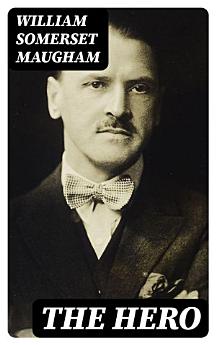
The Hero: Classic of English Literature
Nov 2022 · DigiCat
Ebook
198
Pages
family_home
Eligible
info
About this ebook
In 'The Hero', William Somerset Maugham crafts a poignant narrative that explores themes of identity, ambition, and the duality of human nature. The story revolves around a seemingly unremarkable protagonist who is thrust into the limelight, prompting a deep examination of societal perceptions of heroism and the often absurd expectations placed upon individuals. Maugham's characteristic wit and keen observational style enhance the novella, rendering complex characters that resonate with authenticity. Set against the backdrop of early 20th-century society, the work reflects Maugham's critique of contemporary cultural norms while drawing on rich literary traditions of psychological realism and existential inquiry. Maugham, a master of character-driven storytelling, was influenced by his own life experiences, including his navigation of London's literary scene and his exposure to different cultures during his extensive travels. His insights into human behavior, shaped by his early struggles and later successes, lend a profound depth to 'The Hero.' Maugham's background as a playwright and novelist informs his intricate character development and thematic explorations, making this novella a compelling study of personal and societal conflict. Readers seeking a thought-provoking contemplation on the nature of heroism and the strife for self-identity will find 'The Hero' an essential work. Maugham's incisive narrative invites us to reflect on our own definitions of greatness, challenging us to consider the true costs of recognition and the complexities behind public personas. This novella is not merely a tale of a hero, but a clarion call for introspection and understanding in an often superficial world.
In 'The Hero', William Somerset Maugham crafts a poignant narrative that explores themes of identity, ambition, and the duality of human nature. The story revolves around a seemingly unremarkable protagonist who is thrust into the limelight, prompting a deep examination of societal perceptions of...
Discover more
About the author
William Somerset Maugham (1874–1965) stands among the eminent literary figures of the 20th century. Born in the British Embassy in Paris, he lost his parents early in life and was raised by an uncle. Maugham initially studied medicine, which profoundly influenced his sharply observant writing style. His experiences as a doctor during the slums of London would later seep into the canvas of his storytelling, adding a touch of authenticity and empathy. After the success of his first novel, 'Liza of Lambeth' (1897), Maugham dedicated himself to writing. 'The Hero' (1901), one of his earlier works, exemplifies his talent for human irony and insight. It stands as a testament to Maugham's burgeoning literary style that combines a clear narrative with a deep understanding of human frailties. Maugham also explored the novella form and is best known for 'Of Human Bondage' (1915), arguably his magnum opus. Maugham's oeuvre is characterized by a witty, cynical, yet humane dissection of the human condition. As a dramatist, novelist, and short story writer, Maugham traversed genres with an ease that enchanted critics and the reading public alike. His worldly, disillusioned aesthetic articulates the quiet struggles and emotional complexities of life, rendered through a clear, unadorned prose that has stood the test of time, influencing generations of writers to follow.
William Somerset Maugham (1874–1965) stands among the eminent literary figures of the 20th century. Born in the British Embassy in Paris, he lost his parents early in life and was raised by an uncle. Maugham initially studied medicine, which profoundly influenced his sharply observant writing sty...
Rate this ebook
Tell us what you think.
Reading information
Smartphones and tablets
Install the Google Play Books app for Android and iPad/iPhone. It syncs automatically with your account and allows you to read online or offline wherever you are.
Laptops and computers
You can listen to audiobooks purchased on Google Play using your computer's web browser.
eReaders and other devices
To read on e-ink devices like Kobo eReaders, you'll need to download a file and transfer it to your device. Follow the detailed Help Center instructions to transfer the files to supported eReaders.