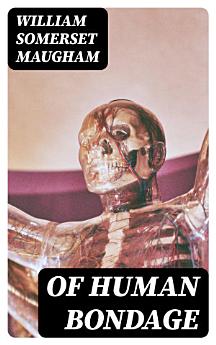
Of Human Bondage
Nov 2022 · DigiCat
Ebook
329
Pages
family_home
Eligible
info
About this ebook
In his seminal work "Of Human Bondage," William Somerset Maugham explores the complexities of human existence through the life of Philip Carey, an orphan grappling with his identity and aspirations in early 20th-century England. Maugham employs a semi-autobiographical narrative style enriched with psychological insight and vivid characterizations, juxtaposing Philip's struggles against the constraints of society, love, and artistic ambition. The novel's rich tapestry incorporates themes of desire, suffering, and the relentless quest for freedom, resonating with the philosophical ideas of existentialism and realism prevalent during Maugham's time, illuminating the human condition in striking clarity. William Somerset Maugham, born in 1874, led a fascinating life that informed his literary endeavors. His upbringing, marked by the death of his parents and subsequent education at medical school before turning to writing, imparted profound insights into the fragility of human relationships and the dichotomy of professional ambition versus personal fulfillment. Maugham's extensive travels and experiences as a playwright and novelist further enriched the authenticity and depth with which he crafted Philip's journey in "Of Human Bondage." This novel is an unparalleled exploration of self-realization and emotional complexity. Readers will find Maugham's dissection of the human psyche profound and relatable, making it a quintessential read for anyone interested in the dynamics of love, art, and the pursuit of personal freedom. Highly recommended for both casual readers and literary scholars alike, "Of Human Bondage" remains a timeless exploration of the bonds that tether us and the courage required to break them.
In his seminal work "Of Human Bondage," William Somerset Maugham explores the complexities of human existence through the life of Philip Carey, an orphan grappling with his identity and aspirations in early 20th-century England. Maugham employs a semi-autobiographical narrative style enriched wit...
About the author
William Somerset Maugham, born on January 25, 1874, in the British Embassy in Paris, remains one of the most renowned playwrights, novelists, and short story writers of the 20th century English literature. His upbringing was marked by tragedy, with the loss of both his parents before he turned ten, leading him to be raised by an uncle. Despite a stutter that hindered his social interactions, Maugham found his voice through writing. Graduating with a medical degree from St. Thomas's Hospital in London, Maugham's experiences as a doctor deeply informed his humanistic and empathetic literary style. However, his true calling lay in the literary world, and after the success of his first novel 'Liza of Lambeth' in 1897, he devoted himself entirely to writing. Maugham's magnum opus 'Of Human Bondage' (1915), an autobiographical novel, is a tale of self-discovery, exploring the complexities of love and art. This work, semi-autobiographical in nature, embodies Maugham's narrative skill and philosophical introspection, solidifying his reputation as a writer of profound psychological insight. His clear-cut prose and cosmopolitan themes garnered a vast readership, making Maugham, at one point, the highest-paid author in the world. Despite his commercial success, critical regard has waxed and waned, with Maugham himself declaring his standing as 'in the very first row of the second-raters.' Maugham's literary output was prolific, marked by works such as 'The Moon and Sixpence' and the popular play 'The Letter.' He died in Nice, France, on December 16, 1965, leaving behind a legacy that continues to captivate and provoke.
William Somerset Maugham, born on January 25, 1874, in the British Embassy in Paris, remains one of the most renowned playwrights, novelists, and short story writers of the 20th century English literature. His upbringing was marked by tragedy, with the loss of both his parents before he turned te...
Rate this ebook
Tell us what you think.
Reading information
Smartphones and tablets
Install the Google Play Books app for Android and iPad/iPhone. It syncs automatically with your account and allows you to read online or offline wherever you are.
Laptops and computers
You can listen to audiobooks purchased on Google Play using your computer's web browser.
eReaders and other devices
To read on e-ink devices like Kobo eReaders, you'll need to download a file and transfer it to your device. Follow the detailed Help Center instructions to transfer the files to supported eReaders.